Here's what nobody tells you about desire and emotional safety
Your body doesn't separate pleasure from safety. It can't. When your nervous system is scanning for threat, your brain redirects blood flow away from arousal and toward survival. This isn't a choice or a flaw. It's biology.
So when you're rebuilding trust after rupture, navigating a new relationship dynamic, or learning to feel secure in your own skin again, desire often arrives last. Not because you don't want your partner. Because your body is still asking: is it safe here?
Why emotional safety comes before arousal
This matters because most sex advice treats desire as a switch you can flip. It's not. It's a system that only turns on when several conditions align. Emotionally, this means:
You need to feel seen and accepted, not just wanted. There's a difference. Wanted is about attraction; seen is about being known and chosen anyway. People whose desire is tied to emotional safety need both.
You need consent to feel bidirectional. If pleasure feels like something you're giving or performing, your nervous system stays tense. Real desire requires the feeling that your partner wants your pleasure too, not just access to your body.
You need predictability in small things. When someone follows through on commitments (showing up on time, remembering details you shared, asking before touching), your nervous system learns to relax. And when it relaxes, desire has room to exist.
You need permission to say no without consequence. This is the biggest one. If you've ever felt trapped into intimacy, or if refusal has cost you (anger, withdrawal, guilt-tripping), your body remembers. Desire only returns when you know, viscerally, that saying no is safe.
What this looks like in your body
When emotional safety is shaky, you might notice:
Arousal that starts then stops mid-experience. Your nervous system registers a micro-threat (a look, a tone, a pressure to climax) and the whole response collapses.
Difficulty being present during sex. Your mind drifts to whether your partner is disappointed, whether you're taking too long, whether they're judging you. Your body is in the room but your awareness isn't.
Desire that only exists outside the bedroom. You might feel turned on thinking about your partner, or reading erotica, or in solo play. But the moment real contact begins, it evaporates.
Orgasms that feel mechanical or muted. You can reach climax, but it feels disconnected from pleasure. There's no buildup of sensation, no sense of release.
All of these patterns are your nervous system protecting you. And here's the thing: fighting it makes it worse. Your body needs to be convinced, not coerced.
How a lemon clitoral vibrator shifts the equation
This is where devices like the Lemon vibrator become genuinely useful. Not as a substitute for emotional work, but as a tool that helps your body practice safety.
When you use a lemon clitoral vibrator solo first, you're teaching your nervous system something crucial: pleasure without performance. There's no one to disappoint, no speed to match, no expectations to meet. Your body learns that sensation can exist for its own sake.
Then, when you introduce a lemon sucker or other clitoral vibrator into partnered sex, it creates space. The vibrator becomes the primary source of stimulation, which means your partner isn't the one generating your pleasure. You are. They're supporting it, but you're in control of intensity, rhythm, and duration.
This subtle shift is massive for people whose desire is conditional on emotional safety. It moves the experience from "my partner is trying to pleasure me" to "I'm experiencing pleasure, and my partner is present for it." Those feel completely different to your nervous system.
Practical steps for rebuilding desire with a vibrator
Start with solo use and pay attention. Before you ever use a Lemon vibrator with a partner, spend time alone. Notice what patterns emerge. Do you tense up at certain intensities? Do you second-guess yourself? Do you rush toward climax or linger? Your solo practice is information about what your body needs.
Use a lemon vibrator as conversation, not performance. When you introduce the device with a partner, frame it differently than you might have been taught. Instead of "I want to use this to come faster," try: "I want to use this so I can focus on what feels good instead of worrying about whether I'm taking too long." That's honest. And it invites your partner into the actual experience rather than making it about your orgasm.
Set boundaries around the vibrator itself. You might say: "I'm the only one who controls intensity. You can touch other parts of me, but the vibrator is my domain." This isn't about rejecting your partner. It's about reclaiming agency in a space where you might have lost it.
Notice when your nervous system relaxes. As you use a lemon clitoral vibrator with your partner over time, watch for moments when you forget to perform. When you stop checking whether they're enjoying themselves and start actually feeling sensation. Those moments matter. Your body is learning that safety and pleasure can coexist here.
Ask for what you need verbally and repeatedly. "I need you to hold me after." "I need you to not check your phone." "I need you to tell me this is about me, not about getting me off." People whose desire is conditional on emotional safety often believe they need to ask once and be understood forever. You don't. You need your partner to prove safety repeatedly, in small ways, until your nervous system believes it.
When to pause and reassess
If you're using a lemon vibrator and you still feel disconnected, numb, or like you're going through motions, that's information. It doesn't mean the device is wrong. It usually means the emotional safety issue runs deeper than solo practice can reach.
This is when couples work with a therapist makes sense. A Gottman-trained specialist can help you both understand the specific ruptures in trust that are affecting desire, and give you concrete tools to rebuild. Devices help. Emotional repair is what actually changes things.
If your partner is resistant to you using a vibrator, or makes you feel shame about wanting one, that's a signal worth listening to. A partner who's secure in your pleasure won't feel threatened by a tool. They'll be curious about what helps you feel good.
The timeline is not linear
Don't expect desire to come roaring back once you start using a lemon sucker or other clitoral vibrator. Rebuilding desire when emotional safety is at stake is slower. It moves in fits and starts. Some weeks you'll feel aroused and present. Other weeks you'll feel like you're back at square one.
This is normal. Your nervous system is learning that this person is safe, that this space is safe, that your pleasure is safe. That learning doesn't happen in a straight line. It happens in spirals.

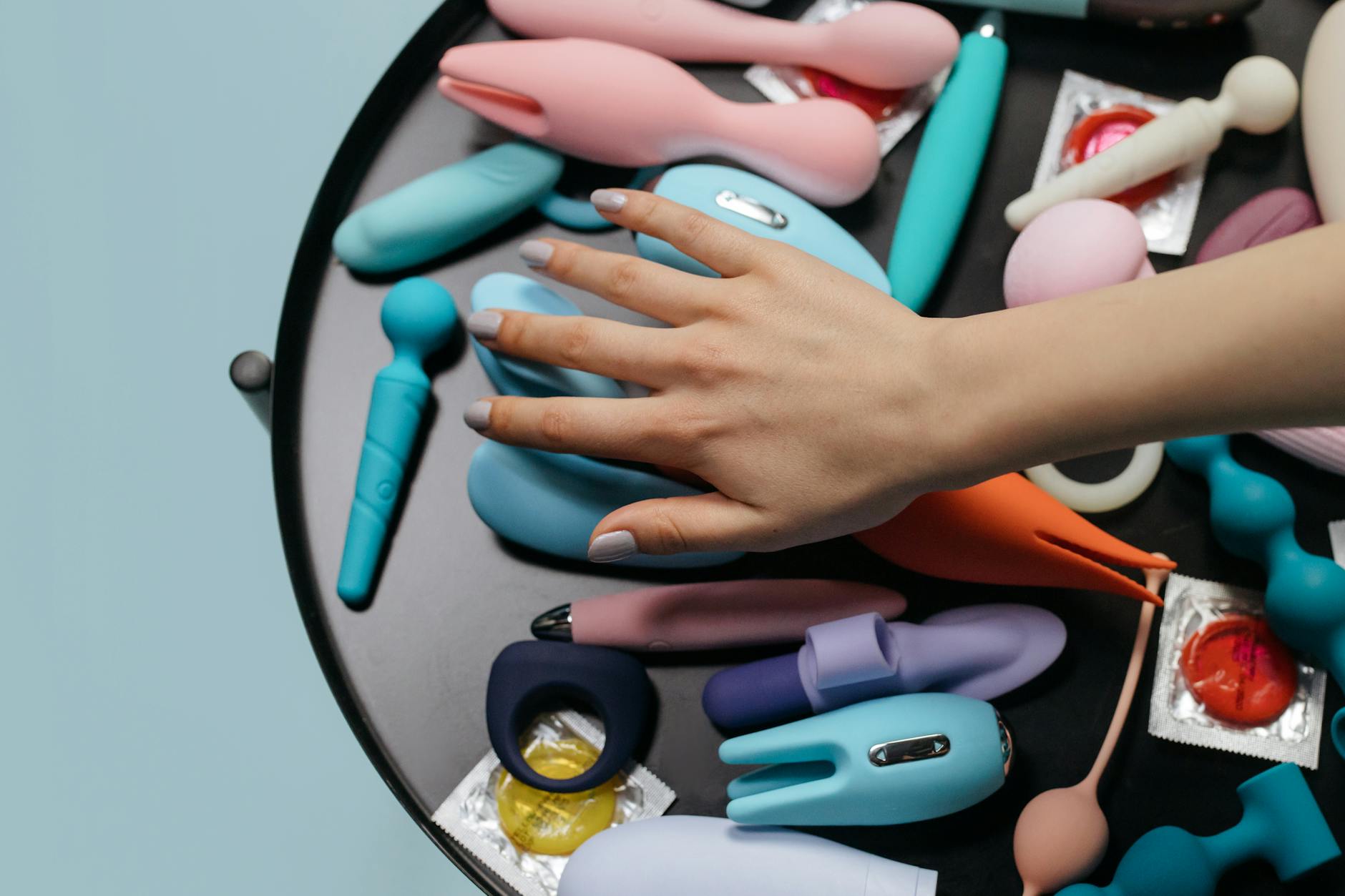
Photo by cottonbro studio on Pexels
Rebuilding desire is rebuilding trust
When you use a lemon vibrator or lemon clitoral vibrator in the context of rebuilding emotional safety, you're not just adding a tool to your sex life. You're creating a new story about what intimacy feels like. One where your pleasure is centered. Where your boundaries are respected. Where your body's timing gets to be what it is.
Your partner gets to be part of that story. But only if they're willing to slow down and let your nervous system lead. If they are, a vibrator becomes a bridge. Not a replacement for the emotional work, but a concrete way to practice, together, what safety and desire can feel like.
If you're interested in learning more about how clitoral vibrators support different body responses, read about how to use a lemon vibrator when arousal rebuilds slower after hormonal changes. You might also find useful perspective in how to use a lemon vibrator when trust rebuilds after infidelity.
Frequently asked questions
Can a vibrator fix desire problems rooted in emotional safety issues?
A vibrator is a tool, not a therapist. What it can do is help your nervous system practice what safety feels like in a sexual context. It shifts the power dynamic from your partner being the sole source of pleasure to you directing your own arousal. But if the underlying trust issue isn't addressed through communication and sometimes professional help, the vibrator will eventually feel like a band-aid. The real work is emotional.
What if my partner feels insecure when I use a clitoral vibrator?
That insecurity is worth exploring together, ideally with a couples therapist. A partner who feels threatened by your device is telling you something about their own fears, not about whether the vibrator is valid. The question isn't whether you should stop using lemon sexual toys. It's whether your partner can examine why your autonomy around pleasure frightens them. That conversation, done carefully, often deepens trust rather than eroding it.
How long does it usually take for desire to return when emotional safety is the block?
There's no universal timeline. Some people feel shifts in weeks. Others take months or years. It depends on how deep the rupture was, how consistent the repair effort is, and whether both partners are genuinely committed to rebuilding. What matters more than speed is consistency. Using a lemon vibrator, practicing boundaries, and having difficult conversations all work together. Missing any one of them slows the whole process.
Is it normal to feel desire in solo play but not partnered sex?
Completely normal. Solo play has no performance pressure. You're not managing anyone's experience but your own. Your nervous system relaxes because there are no external expectations. This gap tells you something: your desire exists, but your nervous system doesn't feel safe enough yet with your partner to access it. That's the thing to work on, not the desire itself.
Should I tell my partner I'm using a vibrator, or keep it private?
If the shame is real and deep, privacy might feel necessary short-term. But long-term, secrecy usually reinforces the idea that pleasure needs to be hidden. The goal is to get to a place where you can say "I'm using a lemon clitoral vibrator because it helps me feel pleasure without performance pressure" and have your partner respond with curiosity rather than hurt. If you can't imagine that conversation feeling safe, that's the emotional safety issue that needs attention.
Can using a vibrator during partnered sex damage intimacy?
Not if it's framed as something you're doing together. If your partner sees it as you taking care of your own pleasure while they're present and engaged, it often strengthens intimacy. If it's introduced as evidence that they're not enough, or if it happens without communication, it can create distance. The device itself is neutral. The conversation around it changes everything.
When emotional safety is shaky, desire waits. And that's not a flaw in you. That's your nervous system being smart. A lemon vibrator can help you practice what it feels like to experience pleasure without threat. But the real rebuilding happens in the conversations, the small acts of follow-through, and the moment your partner proves, again and again, that your pleasure matters.