Let's be real about what hormonal shifts actually do
Your arousal doesn't break when hormones change. It just... pauses longer. The pathway is still there. Your brain still knows how to get there. But the speed at which your body responds to touch, to anticipation, to stimulation shifts in ways that feel foreign if you weren't expecting them.
If you've recently stopped hormonal birth control, moved through a major life transition, or simply notice that your body takes longer to warm up than it used to, you're not alone. And you're not dysfunctional. You're just working with a different nervous system than you were six months ago.
What's actually happening physiologically
Hormones affect arousal in three distinct ways. First, they influence blood flow to genital tissue, which means less engorgement and slower swelling. Second, they regulate neurotransmitters like dopamine and norepinephrine that drive desire and physical response. Third, they affect vaginal lubrication and tissue elasticity, which changes how stimulation feels against your skin.
When hormones shift, all three slow down simultaneously. What used to happen in five minutes might now take fifteen. The sensation might feel muted. The pathway from "interested" to "aroused" becomes less of a direct line and more of a winding road.
Here's what doesn't change: your clitoral nerve density, your capacity for orgasm, or your brain's ability to experience pleasure. You're not less capable. You're operating on a different timeline.
Why air-suction vibrators work better during hormonal transitions
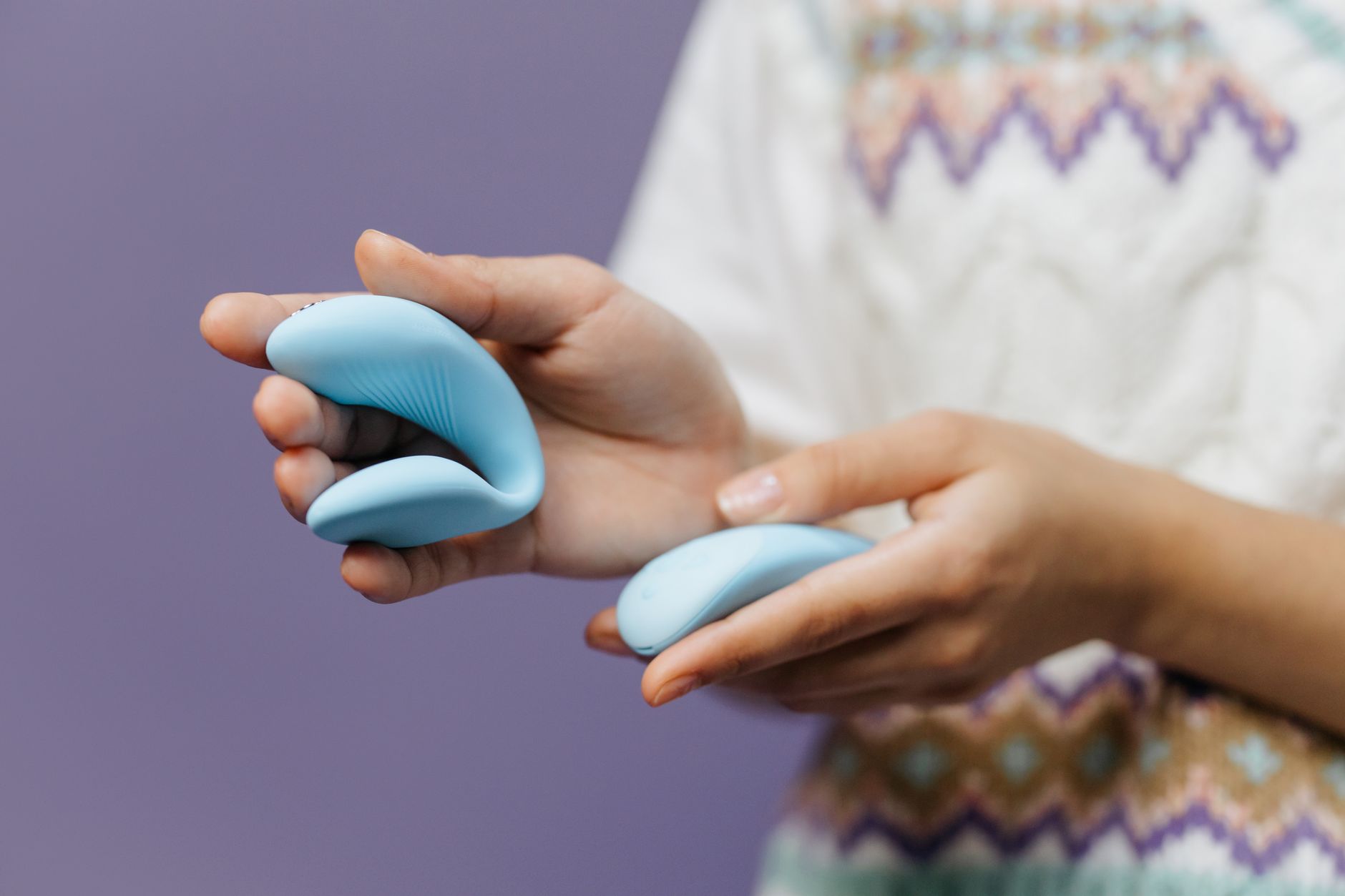
When arousal rebuilds slowly, direct vibration against sensitive tissue can feel too intense too quickly. Air-suction technology like the Lemon vibrator stimulates through gentle pressure waves rather than mechanical buzzing. This matters because your nervous system might be hypersensitive during the transition period, even as arousal takes longer to build overall.
Air-suction also creates a warming, building sensation that mirrors natural arousal more closely than a standard vibrator does. You're not jolting your system awake. You're coaxing it online gradually. For people rebuilding sensation after hormonal changes, that distinction is huge.
The suction also requires less direct pressure, which means you can use it longer without fatigue or discomfort. That extended warm-up window you now need? A Lemon vibrator is designed for exactly that.
The warm-up window: what to actually do with it
Instead of rushing through foreplay to get to the main event, reframe this as an asset. You now get twenty to thirty minutes of uninterrupted attention to your own pleasure. Most people don't take that time.
Here's the structure that works:
Minutes 0-10: Mental warm-up. Put your phone away. Create a distraction-free space. Spend time with fantasies, memories, or anticipation. Your brain is the biggest erogenous zone, and when arousal takes longer, mental focus matters more. No pressure to "feel" anything yet. Just be present.
Minutes 10-20: Light external touch. Use your hands, a partner's hands, or non-vibrating stimulation. Start at the edges of your vulva, outer labia, inner thighs. Keep the touch light and varied. You're not trying to climax. You're telling your nervous system that pleasure is happening.
Minutes 20+: Introduce the Lemon. Start at the lowest suction setting, pattern 1 or 2. Apply it externally first, to the labia, mons pubis, or around the clitoris rather than directly on it. Let your body adjust to the sensation. Many people find that the best response happens when they're not targeting the clitoris directly in these early phases.
Once you feel engagement starting (increased sensation, warmth, swelling), you can move toward more direct stimulation. But you don't have to. Many people find that circling around the clitoris, maintaining external pressure, and building slowly creates a more intense orgasm than rushing to direct contact.
When to increase intensity (and when to hold steady)
One mistake people make during hormonal transitions is assuming that if the lowest settings aren't working, they need to jump to high intensity. That's backwards. If patterns 1 and 2 feel numb, it usually means you need more time warming up, not more power.
Increase intensity only when your body is already responding. You should feel obvious swelling, lubrication, and sensitivity before you move up a pattern level. If you're jumping straight to pattern 5 and feeling nothing, go back to 1 and extend your warm-up by another ten minutes instead.
Many people discover that patterns 3 and 4 become their sweet spot during hormonal transitions, not the highest settings. This is normal. You're not broken. You're just optimizing for your current nervous system, not the one you had before.
The partner conversation, if there is one
If you're with a partner, the biggest mistake is assuming they understand that your arousal timeline has changed. They don't, unless you tell them explicitly. "I'm taking longer to warm up" is not the same as "I need you to try harder." One is information. One is blame.
Make it clear: longer foreplay isn't a setback. It's the new normal, and it's fine. Better than fine. Extended warm-up time often leads to more intense sensation and longer orgasms once they happen.
If your partner wants to be involved, they can help with that early-stage touch work. But honestly, most people find they need solo time with a Lemon vibrator to rebuild arousal on a new timeline. There's less pressure that way. You can focus on your own response instead of managing someone else's expectations.
Troubleshooting when nothing feels like enough
If you're using a lemon clitoral vibrator consistently for a week and still feeling nothing, check these first:
Lubrication levels. Water-based lube isn't optional during hormonal transitions. Apply generously, and reapply during your session. Dry tissue takes longer to respond and can feel uncomfortable at any intensity.
Your mindset. If you're tensing, checking in on whether you're "close," or worrying about taking too long, your nervous system can't relax enough to respond. That parasympathetic activation takes mental permission. Tell yourself this is going to take time. That's okay.
Timing in your cycle. If you menstruate, arousal typically builds more easily in the follicular phase (after your period, before ovulation) than in the luteal phase. Knowing where you are in your cycle helps you set realistic expectations for yourself.
Other medications or stimulants. Caffeine, certain medications, and stress hormones can all flatten arousal response. If you're also managing other life stuff, your body might just need more time and fewer variables competing for your nervous system's bandwidth.
Give yourself at least two to three weeks before deciding something isn't working. Arousal rebuilds on its own timeline, not yours.
When to see a doctor instead of using a toy
A Lemon vibrator can help rebuild sensation, but it's not a cure for everything. If you're experiencing pain during stimulation, complete numbness despite adequate warm-up time, or arousal that never builds no matter the approach, talk to a doctor who specializes in sexual health or reproductive endocrinology.
Sometimes hormonal changes need actual hormone support. Sometimes there's an underlying condition that needs diagnosis. A clitoral vibrator is a tool, not a treatment plan. Use it alongside professional help, not instead of it.
FAQ: Questions people actually ask
Why does arousal take longer after stopping hormonal birth control?
Hormonal birth control suppresses your natural hormone cycle. When you stop it, your body takes time to recalibrate. Estrogen and testosterone fluctuate as your body remembers how to regulate itself. This takes weeks to months. During that recalibration, arousal response is typically slower because the hormones that drive it are still stabilizing. This is temporary, and normal.
Can I make arousal faster by using a vibrator more often?
Not exactly. Frequent use can help your nervous system learn that arousal is possible, which builds confidence and reduces performance anxiety. But you can't force your hormones to work faster. What you can do is remove friction by giving yourself enough time, reducing pressure, and using tools that match your current sensitivity level. A lemon vibrator helps you work with your timeline, not against it.
Should I use the same vibrator if I also have numbness issues?
Yes. Air-suction vibrators like those from Lemon Suckers actually work well for both slow arousal and numbness because they stimulate through pressure waves rather than direct vibration. The sensation profile is gentler and more variable than a standard vibrator. If you're dealing with both slower arousal and reduced sensation, a Lemon vibrator covers both needs.
What if my partner is frustrated that I'm taking longer to warm up?
That's a conversation about expectations and respect, not about your body. Your arousal timeline is not a personal failing. It's physiology. If your partner is frustrated, the issue is that they need education about what's normal, not that you need to force your body to respond faster. A good partner will adjust their timeline. A great partner will see extended foreplay as a gift, not a burden.
Is it normal for arousal to take 20+ minutes to build?
Completely normal, especially during hormonal transitions. "Normal" arousal isn't a fixed timeline. It depends on stress, hormones, relationship dynamics, mental state, and physical health. Twenty minutes is not slow. It's just longer than your personal baseline was before. Once you stop fighting that timeline and start working with it, the experience improves dramatically.
Can I speed things up with higher vibrator settings?
Higher settings won't build arousal faster if your hormones are still in transition. They'll usually just feel overwhelming or numb, depending on your current sensitivity level. Stick with lower patterns and longer warm-up time. You'll get better results and enjoy the experience more. Speed isn't the goal. Pleasure is.
The long game
Hormonal shifts are temporary. Your arousal will stabilize. Your timeline will settle into whatever your new normal is. Until then, a lemon vibrator isn't a band-aid. It's an acknowledgment that your body is doing exactly what it's supposed to do, which is adapt to new conditions. That adaptation takes time. You deserve tools and patience while that happens, not judgment or pressure to perform on an old timeline.