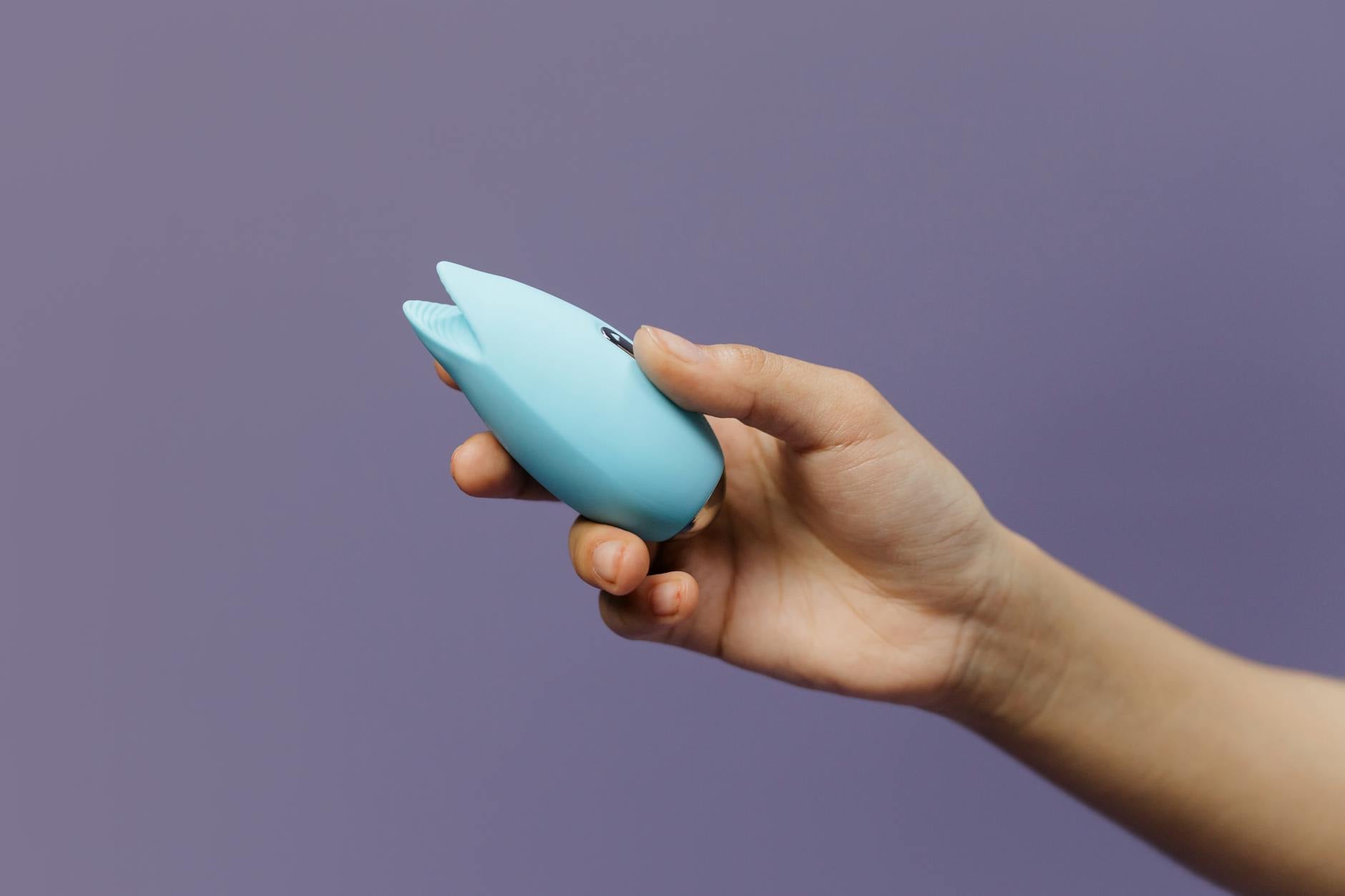
The myth that one setting fits everyone
Here's what I've learned after years of talking to people about their pleasure: there's no universal "best" vibrator setting. The intensity that makes one person's nervous system light up sends another person straight to numbness. Your body type, nerve density, sensitivity thresholds, and even your stress level that day all matter.
A lemon vibrator has multiple speed settings for a reason. Most people grab one setting and stick with it forever, which is like wearing the same shoe size regardless of the shoe. You've probably got options you've never tried.
Why your body type actually changes what works
This isn't pseudoscience. Here's the real mechanics: nerve density varies significantly across bodies. Some people have more concentrated nerve endings in their clitoris, which means lower vibration frequencies trigger sensation faster. Others need higher frequencies to cross their sensory threshold.
Body fat also plays a role. Tissue thickness absorbs vibration, which is why people carrying more weight around the vulva sometimes need higher intensity settings to feel the same sensation as someone with less subcutaneous tissue. This isn't about "better" or "worse." It's about what actually reaches your nerve endings.
Age shifts things too. Estrogen changes the thickness of vulvar tissue, which is why why lemon clitoral vibrators feel better after 40 often describes people discovering higher intensities work better as tissue thins with age.
Start with the lowest setting (seriously)
I know this sounds obvious, but most people don't. They unbox their lemon vibrator and jump straight to setting 4 or 5 because they assume lower settings won't work.
Setting 1 on a good clitoral vibrator like the lemon sucker is not weak. It's a sustained, slow frequency that lets your nervous system recognize stimulation without overwhelming it. Spend at least five minutes here before moving up. Your body needs time to register sensation and wake up arousal.
If you skip this step, you'll train your nervous system to expect high intensity, which makes lower settings feel useless later. You're essentially raising your baseline without meaning to.
The three body types and their sweet spots
High sensitivity. Your clitoris responds quickly to touch. Direct stimulation feels intense fast. For you, settings 1-2 on a lemon vibrator are usually the move. You might never need to go higher. The pattern matters more than the speed. If standard patterns feel too buzzy, the suction-based design of a lemon clitoral vibrator often feels better than traditional vibrators because the stimulation spreads across tissue rather than concentrating on one spot.
Medium sensitivity. Most people fall here. You need a few minutes of warm-up with lower settings, then you're comfortable moving to 3-4. You can stay here indefinitely without numbness if you take breaks. This is where you have the most flexibility to experiment with different patterns and find what shifts your arousal state.
Lower sensitivity or numb baseline. You need higher intensity to feel much of anything. Settings 4-5 on a lemon vibrator are probably your baseline, not your ceiling. You might think you're "broken," but often you're just responding to legitimate neurological differences or you've been using a vibrator at high intensity for so long that desensitization happened. The fix is taking a real break (weeks, not days) and starting over at setting 1.
The pattern question: which one actually matters
A lemon vibrator typically has 5-7 patterns. Pulse, wave, escalation, steady. Most people assume one is objectively better than the others.
They're not. Patterns are like music genres. The "best" one is the one your nervous system is least familiar with at any given moment.
If you've been using the same pattern for months, your body adapts to it. That's not failure, that's neurology. Your brain stops registering familiar input as novel stimulus. Switching to a different pattern for a week often resets responsiveness. This is why lemon vibrator solo vs. partner use sometimes feels totally different—you're usually using different patterns.
Experiment with pattern rotation. Week 1, steady. Week 2, pulse. Week 3, wave. Your body will tell you which one feels fresh.
How to test your actual threshold without guessing
Set aside 15 minutes when you're not stressed and your baseline arousal is neutral.
Start with setting 1 and any pattern. Wait two minutes. Does it register? Can you feel distinct vibration or just light pressure? If it registers but doesn't feel like much, move to setting 2.
Keep moving up in increments of one setting every 2-3 minutes until you hit the point where your nervous system says "this is noticeable sensation." That's not your final answer, but it's your baseline. Your actual preferred setting usually sits one or two notches above that threshold, where sensation is clear but not overwhelming.
Write it down. I know that sounds clinical, but you'll forget, and you'll waste months trying random settings again.
The role of arousal level, stress, and hormones
Here's the complication: your ideal lemon vibrator setting isn't stable. It shifts.
High arousal (you're already turned on before you reach for your vibrator) means you need lower intensity. Your nervous system is primed. Low arousal (you're using the vibrator to build arousal from scratch) often needs slightly higher intensity to cross that initial threshold.
Stress tanks sensitivity. Anxiety constricts blood flow and makes your nervous system more guarded. If you're running on 4 hours of sleep and three coffees, your "normal" setting 3 will feel like setting 2. This is temporary, not permanent.
If you menstruate, hormonal shifts matter too. Some phases of your cycle feel more sensitive than others. This is normal. Instead of fighting it, adjust your setting that day and move on.
Why going too high too fast creates real problems
There's a reason I'm emphasizing the gradual approach. High intensity feels amazing the first few times. Your nervous system lights up. Dopamine floods. You feel like you've found the secret.
Then, within weeks, that same setting feels blunt. You need to go higher. And higher. Before you know it, you're at max intensity and it still doesn't feel like it did three months ago. This is desensitization, and it's preventable.
The best way to avoid it is to never start with high intensity in the first place. If you're already there, the reset is real but it takes time.
If your lemon sucker feels uncomfortable at any setting
Discomfort is different from "not much sensation." Discomfort is pain, pinching, or a feeling that something is wrong. Stop immediately.
This usually means one of three things: the angle is off, you need more lubrication, or that setting is genuinely too intense for your tissue right now. Change the angle first. Lube second. Lower the setting third.
If discomfort happens at setting 1, you might be dealing with vulvovaginal pain that needs medical attention. See a pelvic health specialist.
The long game: staying responsive
Once you've found your sweet spot with your lemon clitoral vibrator, don't lock in. Rotation prevents adaptation. Swap patterns every week or two. Take breaks (a week off every month or two keeps your nervous system fresh). Stay curious about the settings you usually skip.
Your body isn't static. Your ideal setting in your thirties might be different in your forties. After a breakup, stress, pregnancy, or medication change, it shifts again. That's not a problem to solve. It's just part of having a body that responds to the world.