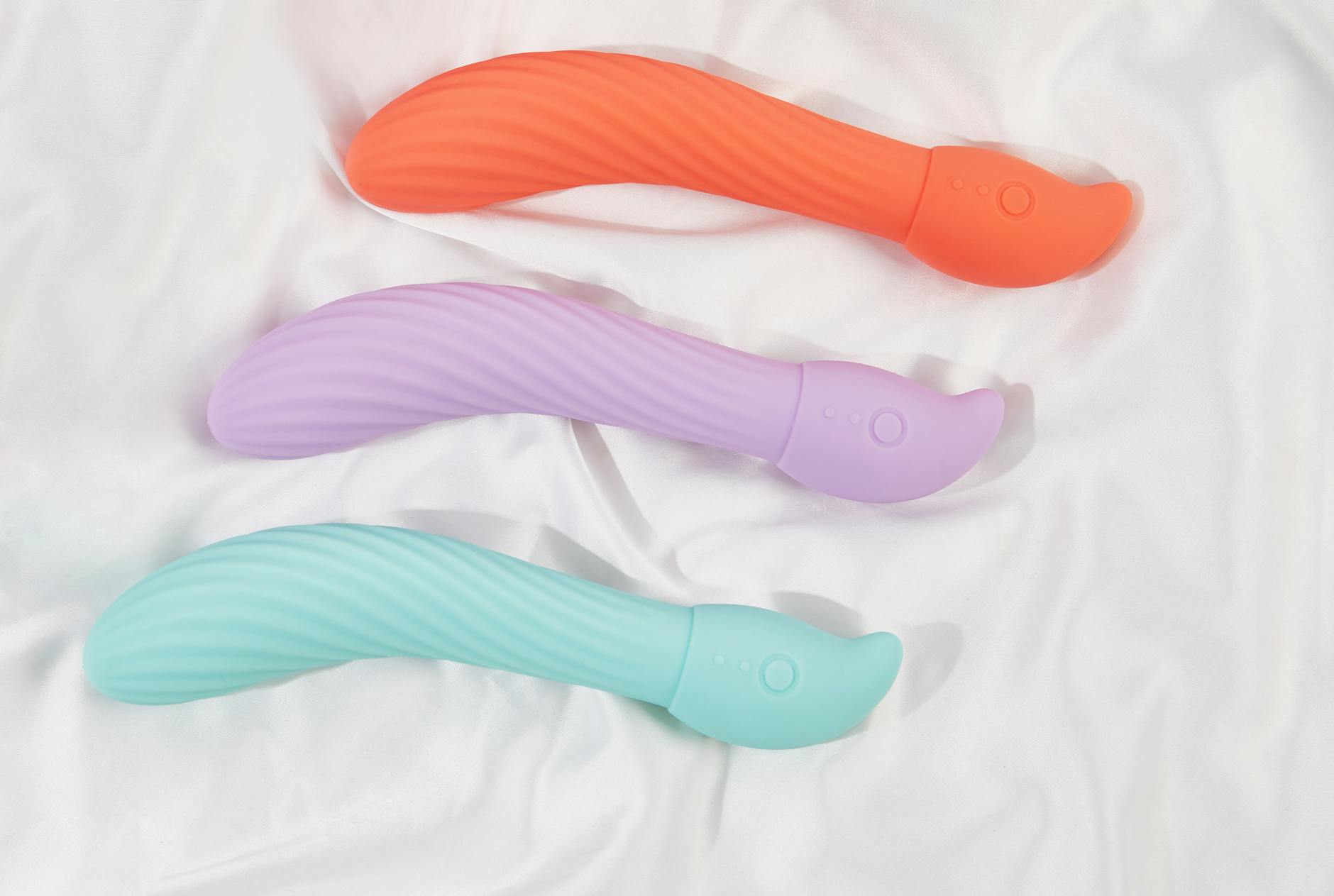
Here's the thing nobody tells you about pleasure after 40
Your body doesn't lose interest in good sensation after 40. It gets pickier. Clitoral tissue becomes less tolerant of blunt stimulation and more responsive to precision. And that's not a downgrade. That's an upgrade most people never get to experience because they're still using the wrong tools.
The clitoral vibrators that worked at 25 often feel harsh, overstimulating, or weirdly numb after 40. Then people assume something's wrong with them. Nothing is. Something's finally right. Your nerve endings are being honest.
Why your clitoral sensitivity actually improves with age
Let me back this up with what's happening physiologically. After 40, several changes work together to reshape how clitoral stimulation feels.
First, the skin around your vulva gets thinner as estrogen gradually shifts. This isn't bad. It means the clitoral glans and surrounding tissue sit closer to the surface. Neural endings become more accessible. A tool that used to have to "push through" layers to reach them now makes contact faster and with less force needed.
Second, the clitoris itself doesn't shrink or fade. The visible part (the glans) might have subtle changes in pigmentation or texture, but the internal structure, the clitoral body and crura, stays intact. You're not losing sensation. You're redistributing it.
Third, after 40, many people report sharper awareness of their own anatomy. You know where you like to be touched because you've spent 20 years finding out. That confidence alone changes everything.
Why lemon vibrators (and suction-based toys) work better now
This is where lemon sexual toys, especially air-suction devices like the Lem, actually shine for bodies over 40.
Traditional vibrators work through friction and repetitive mechanical pressure. After 40, that constant force can feel intense too quickly or create a numbing sensation. Your tissue is thinner, more sensitive, and frankly more discerning about what touches it.
Lemon clitoral vibrators and similar suction-style lemon adult toys use a completely different mechanism. They create a gentle seal and then pulse or wave the pressure inside that seal. You get stimulation of the nerve cluster without the raw friction. It's like the difference between rubbing your arm and using a massage cup on it. Same general area, wildly different feeling.
For people after 40, this approach tends to be less tiring, more precise, and often produces longer, more intense orgasms. The Lem vibrator, for instance, has patterns that start very gentle and escalate gradually. You can stay at a lower intensity longer without feeling like you're chasing the sensation.
The mental piece that actually matters more
Here's what I see in my practice all the time: after 40, the biggest shift isn't physical. It's permission.
By 40, a lot of people have stopped performing their pleasure for someone else. They've grieved or left relationships where their wants didn't matter. They've watched enough people die to know life is finite. They know what they like, and they're tired of pretending otherwise.
That confidence changes how you respond to any stimulation, including vibrators. You're not "supposed to" enjoy something a certain way by a certain timeline. You're not comparing your orgasm to what you think orgasms should look like. You're just present with sensation.
I've had countless clients tell me their orgasms after 40 feel stronger, longer, or more emotionally intense than anything they experienced in their 20s and 30s. Not because their clitoris got better. Because their head finally got out of the way.
Why intensity settings matter more now
One of the biggest mistakes I see is people sticking with the same vibrator intensity they used at 30. After 40, you might find you need less power, not more.
This isn't desensitization. It's the opposite. Your tissue is more sensitive now, so it needs gentler initial contact. The best approach with lemon vibrators or any clitoral toy after 40 is to start at the lowest setting and actually stay there for a few minutes. Let arousal build. Let sensation layer.
Most orgasms that feel "meh" after 40 aren't meh because of your body. They're meh because the stimulation jumped to level 5 right away and your nervous system never had the chance to warm up to it. Your clitoris after 40 doesn't want a sprint. It wants a conversation.
Lubrication matters, but not the way you think
Everyone assumes that after 40, you need more lubricant because "things dry up." That's true sometimes. But it's not the main thing.
What changes is that your skin gets thinner and more delicate around the vulva. Friction that would have felt fine at 30 might feel irritating now. External lubrication reduces that friction, which means you can enjoy longer sessions without discomfort. It's preventive, not compensatory.
Use a good water-based lube if you're using any lemon sexual toy or clitoral vibrator, especially after 40. Not because you're broken. Because you're smart about protecting tissue that's now more exposed.
When to talk to a doctor about changes
If pleasure feels painful or if sensation has completely vanished, don't assume it's just aging. Genitourinary syndrome or other hormonal shifts are real and treatable.
A menopause-trained doctor can prescribe topical estrogen creams that make a massive difference in weeks. They can also discuss whether testosterone therapy makes sense for your situation. These are normal conversations after 40, and they genuinely work.
But if sensation has changed from "strong and immediate" to "takes longer but feels richer when it arrives," that's not pathology. That's your body getting smarter about what it needs.
The practical stuff: how to adjust your routine
If you've been using the same clitoral vibrator or lemon sucker since your 30s and it's starting to feel off, here's what to try first.
Lower the intensity by two or three levels and commit to staying there for at least five minutes. Let your arousal actually build before you escalate. The pleasure will feel stronger, not weaker.
Add lubrication. It changes everything for tissue that's thinner and more delicate. Water-based is safest with silicone toys.
Extend your warm-up time. Fifteen minutes instead of five. Your clitoral tissue over 40 responds better to anticipation and gradual buildup than to immediate intensity.
Consider switching to a suction-style lemon vibrator or air-pulse device if you've been using traditional vibrators. The different mechanism often feels like a completely new experience and is usually better tolerated after 40.
What actually gets better with time
Let me be clear about what I've seen in my work: people's orgasms often get better after 40. Not worse. Better.
You know your body. You're not anxious about whether you're "doing it right." You know what you like, and you've usually stopped caring what anyone else thinks about that. Your tissue is different, yes. But it's also more communicative. It tells you immediately whether something is good or whether it's not.
That feedback loop alone transforms the experience. You're not chasing orgasm anymore. You're just having it, because you've finally learned how to listen to what your body actually wants.
The clitoral vibrators that work best after 40 are the ones that honor that shift. Lemon clitoral vibrators, particularly suction-based designs, tend to match what your body is telling you it needs right now: precision over force, conversation over pressure, sustainability over intensity.
Your best orgasms aren't behind you. You just needed better tools and permission to use them.
People also ask
Why do clitoral vibrators feel different after age 40?
After 40, estrogen gradually shifts, making clitoral tissue thinner and bringing nerve endings closer to the surface. This means you need less force to reach those nerves, not more. Many people also report increased body confidence and less performance anxiety, which changes how they experience sensation. Clitoral vibrators aren't less effective after 40. They just need to match what your tissue is actually asking for now.
Are lemon vibrators better for sensitive tissue after 40?
Lemon sexual toys, especially suction-style clitoral vibrators like the Lem, often work better for bodies after 40 because they use gentle pressure waves instead of direct friction. Traditional vibrators can feel overwhelming or create numbing sensations on thinner, more delicate tissue. That said, what works is personal. Many people find that switching to lower intensity settings on their existing toy works just as well. The key is listening to what your body tells you, not assuming one design is universally "better."
Do I have desensitization if lemon vibrators feel less intense after 40?
Probably not. What you're experiencing is usually thinner tissue being honest about what it does and doesn't like. High intensity that felt good at 30 can feel raw or overstimulating at 40. This isn't your clitoris getting numb. It's your clitoris getting picky. Lowering intensity and extending warm-up time usually brings back that satisfying sensation. If you've genuinely lost all feeling and it coincides with hormonal changes, that's worth discussing with a doctor, but age alone doesn't cause numbing.
Should I use different lube with clitoral vibrators after 40?
Your tissue is thinner and more delicate after 40, so external lubrication becomes less optional and more essential. Water-based lube is safest with silicone toys like most lemon adult toys. It reduces friction, extends session length, and protects tissue that's now more exposed. You're not using it because something's wrong. You're using it because you're protecting something valuable.
How long does it take to adjust to new sensations with lemon vibrators after 40?
Most people notice a difference within one or two sessions of lowering intensity and extending warm-up time. If you're switching to a completely different toy (like moving from a traditional vibrator to a suction-style lemon clitoral vibrator), give yourself three or four sessions to let your body adjust to the new sensation. Patience here actually pays off faster than pushing through discomfort.
Is it normal for arousal to take longer after 40?
Completely. Arousal at 40 often takes longer to build but creates more sustained pleasure when it does. This isn't dysfunction. It's a shift in how your nervous system works. Hormonal changes, life stress, and just the biology of aging all play a role. The solution isn't to force arousal faster. It's to lean into a longer warm-up as a feature, not a bug. Many people over 40 report that this slower build actually leads to stronger, longer-lasting orgasms.
The bottom line
Your clitoris after 40 isn't broken. It's evolved. It's more particular, more responsive to precision, and usually more capable of sustained pleasure than it was at 25. The lemon vibrators and clitoral toys that work best now are the ones that respect that evolution instead of fighting it.
Lower your intensity. Extend your warm-up. Use lubrication. Choose tools that favor precision over force. And most importantly, stop comparing your pleasure now to your pleasure then. Your body's not worse. It's wiser. And if you want to explore what that wisdom can do, reach out and let's talk about what actually works for you.