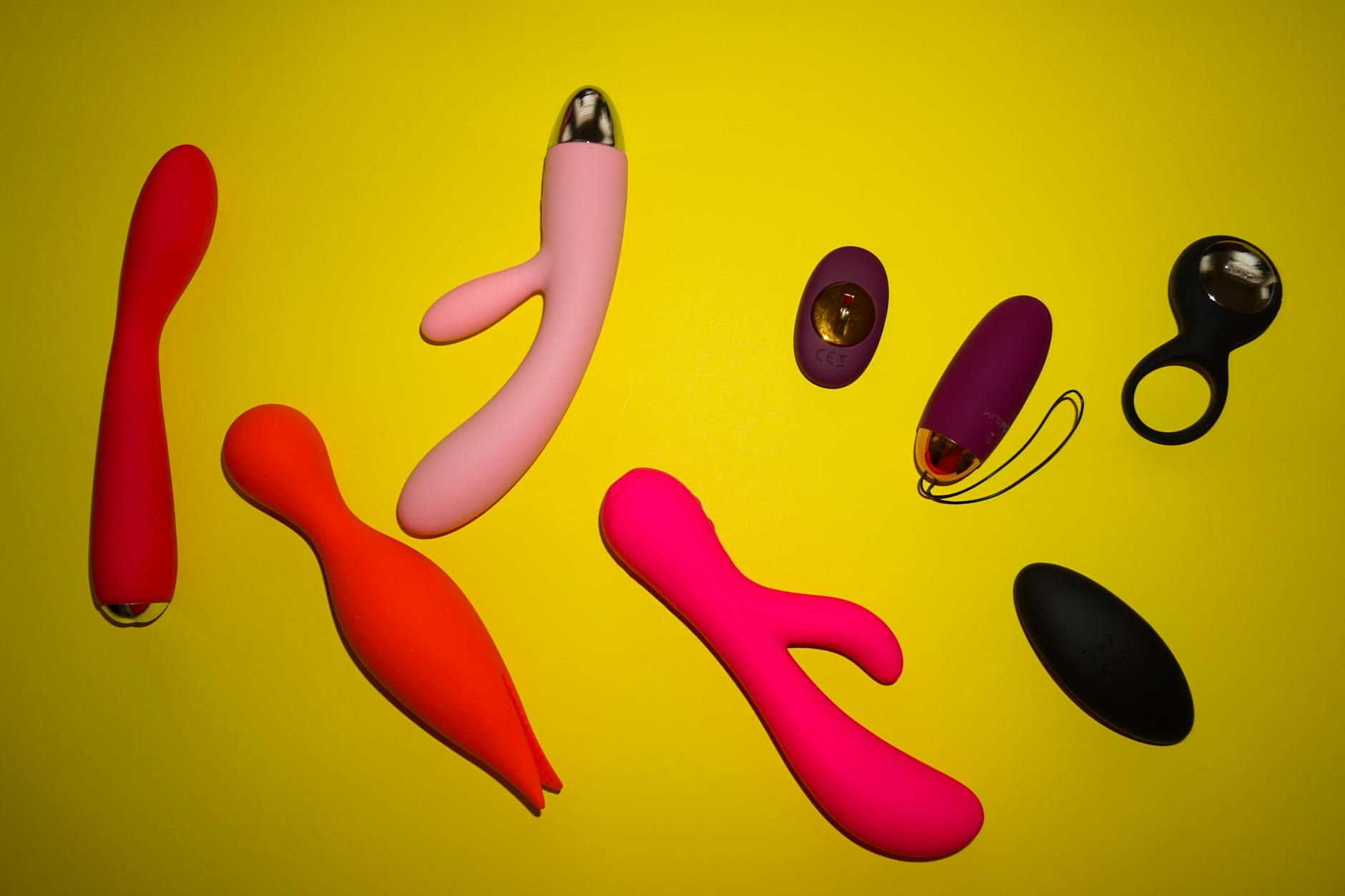
Let's talk about the elephant in the bedroom
You know what's weird? The same lemon vibrator that makes you come in about four minutes alone can take twenty with a partner in the room. Or sometimes it doesn't work at all. Or it works better than ever. There's no single answer because the variable isn't the toy. It's your nervous system.
I've worked with hundreds of couples navigating this exact confusion, and the pattern is always the same. They assume the lemon vibrator is broken, or that they're broken, or that something about their relationship is wrong. Usually none of that is true. What's actually happening is biological and completely normal.
Here's what changes when you add another person to the experience, and what actually matters when you're trying to make it work.
The nervous system shift (this is the real story)
When you're alone with a lemon clitoral vibrator, your parasympathetic nervous system has room to settle. You control the pace, the pressure, the interruptions, the narrative in your head. Your body can relax into arousal.
The moment another person enters the scene, something shifts. Your sympathetic nervous system activates. You're now managing variables you don't control: their touch, their gaze, their rhythm, the possibility that they're judging you, the pressure to perform. This isn't anxiety exactly (though it can be). It's just your brain processing more information at once.
Here's what that actually means for your body: you might need longer warm-up time, lower initial intensity on the lemon vibrator, and more manual stimulation from your partner before the toy gets involved. Some people need the toy involved immediately to feel safe. Neither is wrong.
The clitoral nerve has about 8,000 nerve endings packed into a space the size of a pea. A vibrator like the Lemon directly targets those. But your brain is also a sexual organ, maybe the primary one. If your brain is occupied with managing the social dynamics of the moment, your clitoris doesn't get the neural bandwidth it needs to respond.
What actually feels different (the physical stuff)
Three things change materially when you're using a lemon vibrator with a partner:
1. Pressure and angle. When you're alone, you control the exact pressure you apply and the angle you hold the vibrator at. With a partner, someone else is holding it (usually). Most partners apply more pressure than solo play. Some apply less. Either way, you've lost the precision that got you off alone. This is why the first time using a lemon clitoral vibrator with someone usually feels weird. You have to learn their touch.
2. Consistency of stimulation. Alone, you can lock in a rhythm and let your body escalate. With a partner, there's often more movement, more playfulness, more breaking rhythm. Some people find this hot. Others find it distracting enough that they can't come. It's not about the relationship being wrong. It's about needing different conditions for arousal.
3. Distraction (the good and bad kind). Kissing, being touched elsewhere, eye contact, dirty talk, the sound of someone's breath. These are all happening simultaneously with the vibrator. Your brain is processing pleasure from multiple sources. That can amplify everything, or it can fragment your focus enough that nothing lands cleanly. You get to figure out which.
Why you might take longer with a partner
It's almost always one of these three things.
You're managing their experience. You're thinking about whether they're bored, whether they're enjoying themselves, whether they think your body looks a certain way during sex. This is particularly true if you've internalized the message that your pleasure is secondary to your partner's entertainment. In that headspace, your nervous system cannot settle into the parasympathetic state you need to come.
You need different stimulation. Maybe the angle your partner holds the lemon vibrator at doesn't work for you. Maybe you need slower buildup. Maybe the toy needs to be involved five minutes in instead of immediately. The solution here is information. You need to tell your partner what works, which requires you to know what works first (solo exploration is legitimate prep).
The synchronization is off. If your partner is thrusting while you're using the vibrator, or if they're speeding up while you're still in the buildup phase, your nervous system gets confused about what to focus on. The brain is a prediction engine. It gets derailed when the signals don't align.
Why you might come faster (and that's not necessarily a sign of anything)
Some people report orgasming much more quickly with a partner, especially when a lemon vibrator is involved. This is usually because:
The added stimulation and physical contact push you past the threshold faster. You don't have to do all the mental work of arousal alone. Your partner's presence, touch, and arousal can carry some of that load.
There's less time to overthink it. When you're focused on your partner and being present with them, the internal critic gets quieter. You can't simultaneously worry about your thighs and be fully engaged with someone kissing your neck.
The vulnerability of being seen can be incredibly arousing. Some people find that the act of allowing someone to watch or participate in their pleasure actually accelerates it. This is a feature, not a sign that you're broken or that solo play doesn't count.
The communication part (this is what actually fixes things)
Here's what I tell couples who are frustrated that a lemon vibrator doesn't work the same way solo versus together: the toy isn't the problem. The information gap is the problem.
You need to separate three conversations:
1. What works for you alone. Know this first. Not theoretically. Actually know it. How long does it take? What pressure? What rhythm? What mental space? You can't guide someone else through your pleasure if you don't know the map.
2. What works for you with them. This is different. Maybe you want them holding the vibrator while you control pressure. Maybe you want them using it on you while you focus on them. Maybe you want the toy involved early or late. This takes experimentation and honesty.
3. What you're afraid of. This is the one nobody wants to say. Are you scared they'll judge your body? Afraid you won't come and they'll lose interest? Worried you're taking too long? Most barriers to pleasure aren't about the toy or the logistics. They're about what you're making the orgasm mean about yourself, your body, or your relationship.
When you're using a clitoral vibrator like the Lemon with a partner, you're not just coordinating bodies. You're managing vulnerability. The physiological response is real. The nervous system stuff is real. But the emotional architecture matters just as much.
Making it work practically
If you want a lemon vibrator to feel good with a partner, here are the basics:
Start with longer foreplay than you think you need. Aim for 15 to 25 minutes before the toy comes out. Your nervous system needs time to downregulate from social processing into sexual arousal.
Let your partner know what you need before you start. "I need you to hold it steady at this angle" or "I want to control the pressure" or "I need you touching me elsewhere while I use it" removes the guessing game.
Give yourself permission to use it solo sometimes. The fact that you can come alone doesn't mean something is wrong when you can't come with a partner the same way. They're different experiences. Both are valid.
Remember that what works this time might not work next time. Arousal isn't consistent. Your nervous system is responsive to stress, sleep, hormones, your relationship dynamics, and a hundred other variables. A lemon vibrator didn't stop working. The conditions changed.
FAQ
Why do I come faster alone than with my partner using a lemon vibrator?
Your parasympathetic nervous system is more settled when you're alone. You control the pace, pressure, and stimulation. With a partner, you're managing social and emotional variables simultaneously, which can slow arousal or require different conditions. This is neurologically normal, not a relationship problem.
Is it okay to only be able to come with a lemon vibrator when I'm alone?
Completely okay. Many people have different arousal pathways for solo versus partnered sex. The goal is not uniformity. The goal is knowing what works and communicating it. Some people integrate toys easily with partners. Others don't. There's no wrong version.
Should I tell my partner I come faster alone?
Yes, but frame it as information, not criticism. "I need more buildup time when we're together, and I want to guide the pressure" is useful data. "I only actually come when I'm alone" might feel like rejection to them even if it's not. Separate the logistics from the intimacy.
Why does a lemon clitoral vibrator feel different depending on who's holding it?
Pressure, angle, rhythm, and consistency all change when someone else has the controls. Additionally, you're now managing their presence, energy, and touch patterns, which divides your neural attention. You might need different setup, more time, or different involvement from your partner.
Can using a lemon vibrator with a partner ruin solo pleasure?
No. They're different experiences with different neural requirements. Using a vibrator one way doesn't damage your ability to use it another way. What sometimes happens is that you realize you prefer one context to another, which is useful information.
What if my partner wants to use the lemon vibrator on me but I prefer using it myself?
Tell them. Preference isn't rejection. You might say, "I like when you touch me here while I use it myself" or "I want to guide the pressure." Many couples find a hybrid approach where one partner uses the toy while the other provides other types of stimulation or presence. The point is that you both know what you're aiming for.
The bottom line
Using a lemon clitoral vibrator alone and with a partner aren't comparable experiences. Your nervous system responds differently. Your attention is divided differently. Your vulnerability is different. That's not a flaw in your body or your relationship. It's just how arousal works when the variables change.
What matters is knowing what you need and being able to ask for it. That's the actual skill. Not the toy. Not the technique. The communication.