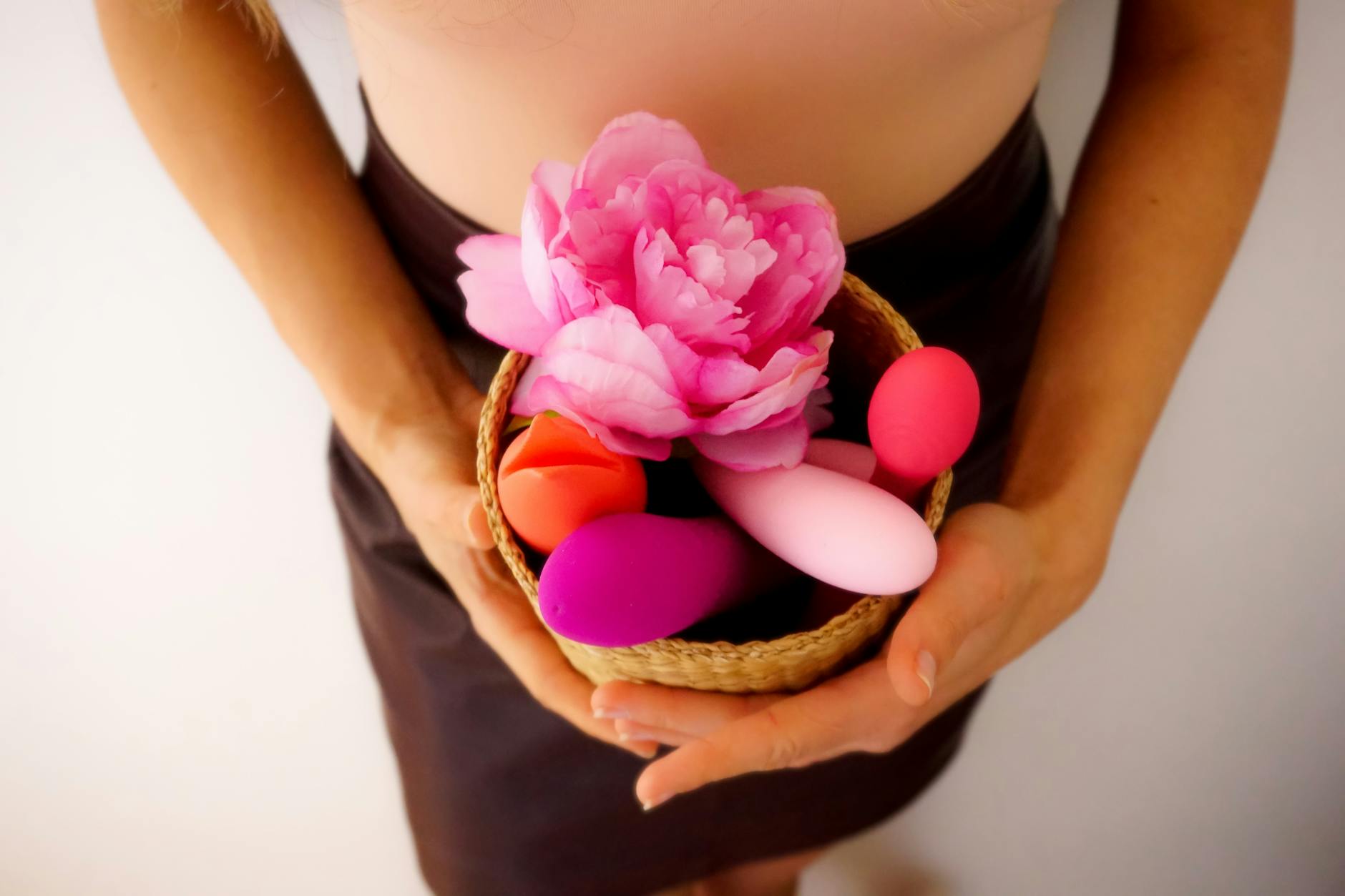
Let's be real about how your body changes pleasure
The same lemon vibrator you loved at 25 might feel too intense at 40. Or maybe it finally feels just right. Your partner notices the shift. You notice it. And then you wonder if something's wrong. It's not. Your body is just doing what bodies do across a lifetime: changing.
This isn't about aging badly or losing sensation. It's about how estrogen, blood flow, muscle tone, and pelvic floor strength shift through different decades. Understanding those shifts means you stop fighting your body and start working with it.
Early twenties: the sensitivity peak (and why intensity matters)
In your twenties, estrogen is steady and high. Tissue is thick and well-lubricated without trying. Blood vessels are responsive. Your clitoral tissue is engorged and sensitive. A lemon vibrator on pattern 4 or 5 feels incredible. You can move fast, go hard, and recover quickly.
This is also when sensation is often at its sharpest. Direct clitoral stimulation works immediately. You don't need much warm-up time. Orgasms come fast or slow depending on what you want that day.
The catch? Many people in their twenties don't realize how much hormonal variance matters within a single cycle. If you use a lemon vibrator mid-cycle, you'll feel different than right before your period. That's not the vibrator changing. That's your estrogen doing its job.
Late twenties and thirties: where consistency starts shifting
Somewhere around 28 to 32, something subtle happens. Your estrogen levels don't crash, but they start becoming less stable. If you're on hormonal birth control, this creates an artificial flatline. If you're not, you might notice more variation from day to day than you did before.
For people using lemon sexual toys during this window, the most common experience is that intensity feels less dramatic. You might need patterns 3 or 4 instead of jumping straight to 5. Warm-up time extends from zero to five or ten minutes. That's not weakness. It's hormonal reality.
This is also when stress and relationship dynamics start reshaping sensation more noticeably. Why lemon vibrators feel less intense with anxiety and stress becomes something you actually understand in your body, not just in theory.
Breakups hit differently too. The body has a refractory period for pleasure that goes beyond the emotional one. If you're restarting solo after years with a partner, give yourself grace. How to use a lemon vibrator after taking a long break isn't just about technique. It's about letting your nervous system recalibrate.
Early forties: when lemon clitoral vibrators often feel better
Here's where the narrative usually gets dark. People tell you sensation dies after 40. Your body knows better.
Yes, estrogen begins its slow decline in the early forties. But something else happens that nobody talks about: you know your body. You're not performing. You're not managing someone else's expectations. You've probably learned what you actually want versus what you thought you should want.
Most of my clients report that why lemon clitoral vibrators feel better after 40 comes down to mental clarity more than physical change. The distraction of hormonal cycling, fertility anxiety, and social pressure lifts. Your lemon vibrator doesn't feel different because the sensation is sharper. It feels different because you're finally paying attention.
That said, the tissue is thinning slightly. You might need more lubrication. Patterns 2 and 3 become your favorites instead of 4 and 5. Warm-up time extends to 15 to 20 minutes. That's not less pleasure. That's a different path to the same destination.
Late forties through menopause: the transition window
Perimenopause is the long runway before menopause lands. It lasts years. During this time, hormone levels get erratic. Some days you feel like your thirties self. Other days your body barely responds to your lemon adult toy at all.
This is where most people panic. They assume something is broken. Usually, it's just that your hormone cycle is getting chaotic before it settles. Clitoral tissue becomes less engorged. Lubrication decreases. The pelvic floor loses some estrogen support.
A water-based lubricant becomes essential, not optional. The gentle suction of a lemon vibrator works better than direct vibration because it stimulates nerve endings without requiring the same tissue thickness. Starting on lower patterns and building up becomes your new normal.
The mental piece matters wildly here too. Midlife brings loss alongside opportunity. Relationships shift. Bodies age visibly. If pleasure feels distant, it might not be hormonal. It might be grief wearing a hormonal disguise.
Post-menopause: surprising intensity returns (just different)
Once your cycle stabilizes on the other side of menopause, something unexpected often happens. Sensation actually becomes more intense again. Not because estrogen returns, but because the erratic chaos stops.
Your body settles into its new baseline. Tissue adapts. You stop fighting the hormonal fluctuations and start working with what's stable. Many of my clients report that their most satisfying orgasms come after menopause. This isn't a polite lie. It's a consistent clinical observation.
Your lemon clitoral vibrator setup stays similar to perimenopause setup, but the experience becomes more reliable. You know what to expect. You're not second-guessing your body.
What actually changes across all these stages
Four things shift reliably. Everything else is optional.
Lubrication. It decreases with age and lower estrogen. Water-based lubrication isn't a sign of failure. It's a tool that works better as your tissues change.
Blood flow. In your twenties, genital blood flow responds to arousal within seconds. By your forties, it might take minutes. By your fifties, it takes longer still. This doesn't mean you can't get there. It means the timeline changes.
Pelvic floor tone. Estrogen supports this muscle. As it drops, the pelvic floor loses some automatic support. Kegels help. So does learning to relax it fully, which paradoxically becomes harder as tone decreases.
Clitoral sensitivity. The tissue itself becomes less engorged as estrogen drops. This sounds like bad news. It actually means direct intense vibration becomes less comfortable. Gentler patterns and suction-based stimulation often feel better.
What doesn't change: your capacity for pleasure, your ability to orgasm, the neural pathways for arousal, and your right to prioritize your own satisfaction.
The practical adjustments that actually matter
Instead of fighting your age, work with it. This is where lemon vibrators shine because the intensity range is real.
Start on patterns 1 and 2 if you're new to a stage of life you haven't felt yet. Build up slowly. You might find that patterns 2 to 4 become your sweet spot for years. That's normal. That's not settling.
Allot more time than you think you need for warm-up. Fifteen to twenty minutes of foreplay before using your lemon adult toy isn't excessive. It's biology.
Use lubrication freely. Your body producing less natural lubrication is not a personal failure. It's a physiological fact. Water-based lube is your friend.
Pay attention to how your body feels across your cycle if you still menstruate. Ovulation week will feel different than menstruation week. That variance is information, not confusion.
If you're with a partner, separate the conversation about your body changing from the conversation about your relationship. One is physiology. The other is partnership. Mixing them turns both into problems that can't be solved.
When to seek help
If pleasure completely disappears and doesn't return after a few months of adjustment, talk to a gynecologist trained in menopause medicine. This isn't rare. It's treatable.
If pain appears, don't wait. Genitourinary syndrome of menopause is common and responds well to topical estrogen creams or systemic hormone therapy if appropriate for you.
If desire tanked and it's affecting your sense of self or your relationship, a therapist trained in sexuality and midlife transitions can help separate what's hormonal from what's emotional or relational.
The real shift across a lifetime
Your lemon vibrator isn't changing. Your body is. That's not a loss. It's a continuous recalibration. The specificity of what you need and want becomes clearer with age, not hazier.
You deserve to feel good across every decade. That might mean adjusting intensity, adding lubrication, taking more time, or shifting which patterns you use. None of that is compromise. It's optimization.
People also ask
Why does my lemon vibrator feel more intense after my period?
After menstruation, estrogen rises sharply. Higher estrogen means more blood flow to genital tissue, more engorgement, and more sensitivity. The same vibrator setting feels stronger in the week after your period than in the week before. This is completely normal. Some people use lower patterns during high-estrogen phases and higher patterns during low-estrogen phases.
Can lemon vibrators still work after menopause?
Absolutely. Menopause doesn't end pleasure. It changes the pathway to pleasure. Lemon clitoral vibrators often work better after menopause because the suction mechanism is gentler on thinning tissue than direct vibration. Many people find that patterns 2 to 4 become their favorite range, and orgasms feel equally intense or more so than before.
Does using a lemon vibrator regularly speed up aging of tissue?
No. Regular, healthy masturbation with a lemon vibrator doesn't damage tissue or accelerate aging. In fact, consistent blood flow to genital tissue through regular use may support tissue health. What does matter is using appropriate intensity for your current life stage and using lubrication when needed.
Why did my lemon vibrator feel different after I stopped hormonal birth control?
Hormonal birth control flattens your natural hormone cycle. When you stop it, your natural hormonal variance returns. That means sensation fluctuates more across your cycle. Patterns that felt right on birth control might feel too intense or too gentle off it. Your body isn't broken. It's just processing real hormone cycles again instead of artificial ones.
Is it normal for lemon vibrators to feel numb when I'm stressed?
Yes. Stress activates your sympathetic nervous system, which constricts blood vessels and dampens genital sensation. That's why why lemon vibrators feel less intense with anxiety and stress is such a common experience. If stress is persistent, that's worth addressing at a systemic level, not just accepting during solo time.
How do I know if changes in sensation are age-related or something else?
Track what you notice across a few weeks. Note your stress level, sleep quality, cycle phase if applicable, and medication changes alongside how your lemon vibrator feels. Patterns emerge. If sensation changes suddenly alongside other symptoms like pain, vaginal dryness, or mood changes, that's worth discussing with a doctor. Gradual shifts across months or years are usually age and hormonal change.
The bottom line
Your body across a lifetime is the only life you get to live. Understanding how it changes means you stop chasing the sensation of your twenties and start discovering what your current body actually wants. That's not settling. That's intimacy with yourself.