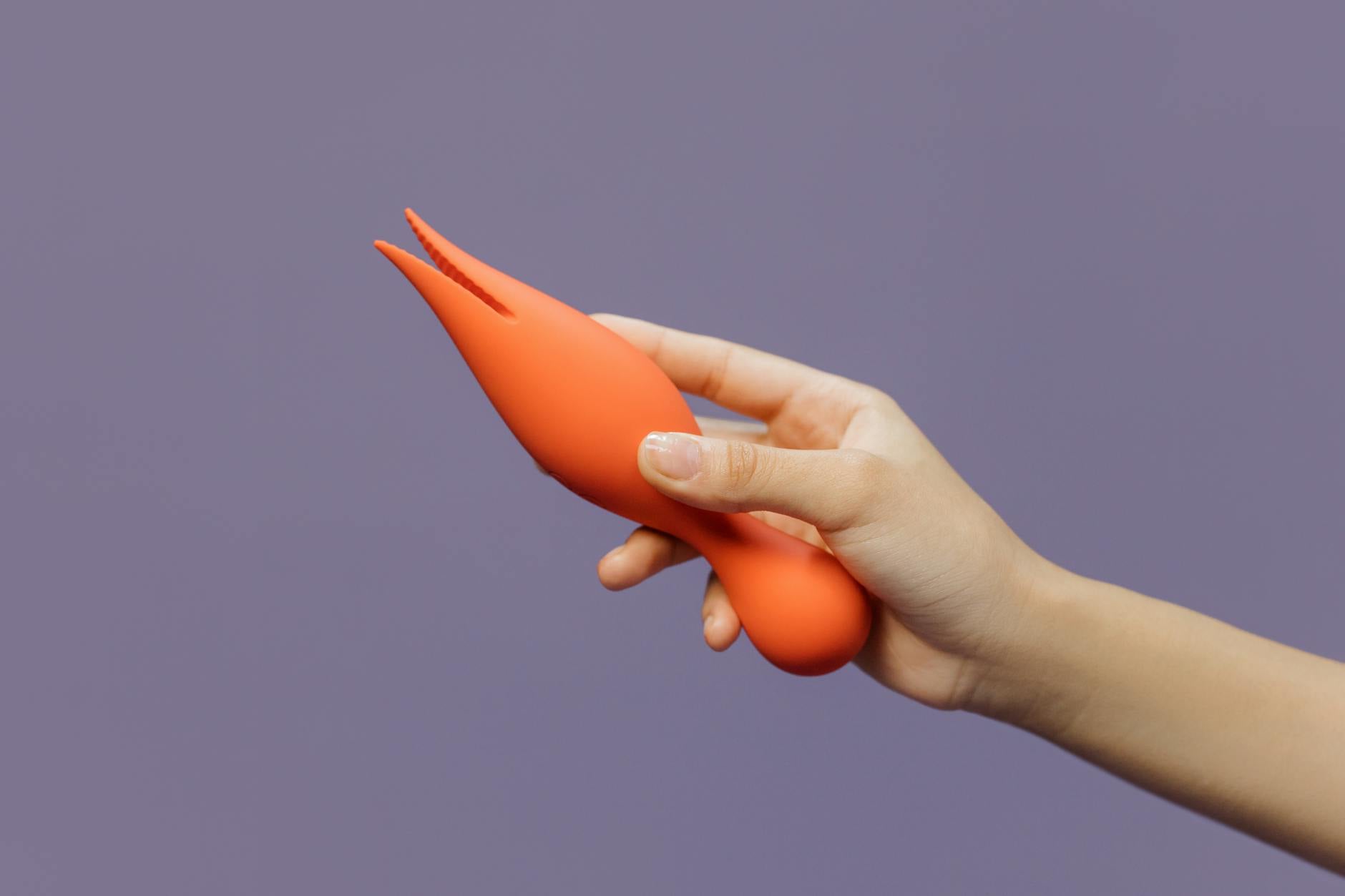
Let's start with the thing nobody tells you
If you have eczema, psoriasis, dermatitis, or any skin condition that makes your vulva or surrounding tissue reactive, you've probably been told to avoid a lot of things. But nobody talks about using a lemon vibrator or any clitoral vibrator when your skin flares. The assumption is that you just... shouldn't. That pleasure is off the table.
It's not. You just need to be strategic.
I've worked with clients through countless skin conditions, and the ones who get the best outcomes aren't avoiding pleasure. They're being intentional about timing, material, settings, and prep. This is the framework that works.
Why lemon vibrators can actually be gentler on reactive skin
Here's something counterintuitive: a quality lemon clitoral vibrator can be less irritating than manual stimulation if you use it correctly. Here's why.
When your skin is sensitive, friction is your enemy. Hands create unpredictable pressure, varied speed, and direct rubbing. The silicone on a lemon vibrator (or any quality clitoral vibrator from Hello Nancy) is smooth, consistent, and lets you control pressure by adjusting the pattern and intensity.
Air-suction devices like the Lem don't use vibration at all. They use gentle pulsing suction, which many people with dermatitis find less irritating than buzzing. Suction stimulates deeper nerve layers without the surface friction that can trigger flares.
That said, material matters obsessively. Not all silicone is equal, and this is where most people slip up.
The material question (non-negotiable)
Buy a lemon adult toy from a reputable brand. That's the only safe bet. Here's why it matters.
Low-quality vibrators sometimes use porous materials that can't be cleaned properly and may contain chemicals that leach into tissue. Medical-grade silicone is non-porous, non-reactive, and can be sanitized completely. When you have dermatitis, eczema, or psoriasis, porous materials can trap bacteria and irritants that will cause flares.
Hello Nancy's lemon vibrators are made from body-safe silicone. Full stop. That's your baseline. If you're buying elsewhere, you need a product explicitly labeled "medical-grade silicone," "non-porous," or "dermatologist-tested."
Plastic, rubber, or unspecified "silicone" is a no. Hard materials can create micro-abrasions on sensitive tissue. Anything with a rough texture will irritate reactive skin faster.
Prep work that prevents flares
The night before you plan to use your lemon vibrator, do this.
First, wash your hands thoroughly and trim your nails. Skin flakes and bacteria from under fingernails can transfer to the toy and then to your vulva, triggering inflammation.
Second, clean your toy. Use warm water and a gentle, fragrance-free soap. Dry it completely with a soft cloth. If you've used it since the last wash, do this before you start again, not after.
Third, avoid any lotions, fragrances, or new products on the area that day. If you use a prescription ointment (steroid cream, tacrolimus, etc.), apply it at least 2-3 hours before using the vibrator. You want the medication absorbed, not creating a barrier that mixes with lubricant.
Fourth, warm a washcloth under lukewarm water (not hot) and gently dab the area. Warmth increases blood flow and can make sensation better without inflammation. Cold can make reactive skin feel numb or more irritated.
Lubrication strategy (when you have reactive skin)
This is where most mistakes happen. The wrong lubricant will destroy the experience if you have dermatitis or psoriasis.
Use water-based lubricant only. No silicone-based lubes, no coconut oil, no hybrid formulas. Silicone lubes are hard to wash off and can trap heat against your skin. Oils can feed bacteria and trap sweat.
But not all water-based lubes are created equal for reactive skin. Avoid lubes with parabens, glycerin, phenoxyethanol, or fragrance. Check the ingredient list. If it reads like a chemistry lab, it probably will irritate you.
Better options: Hypoallergenic lubes designed for sensitive skin, or in a pinch, plain warm water mixed with a tiny bit of hydrating serum (if you use one for your face). Yes, plain water works. It's not as long-lasting, but it won't trigger inflammation.
Apply lube generously. More lube means less friction. You want a slippery surface between your skin and the toy. Reapply halfway through if you're going longer than 10-15 minutes.
Pattern and intensity settings matter more than you think
Most lemon sexual toys have multiple patterns. When your skin is reactive, start at pattern 1 or 2. These are typically the gentlest, steady pulses without dramatic intensity spikes.
Avoid pulse patterns that ramp up suddenly or alternate between fast and slow in the first few sessions. You're testing tolerability, not chasing the biggest orgasm. Give your skin time to adapt.
Intensity: start at level 1. Increase by one level every few sessions if you're not experiencing any itching, redness, or irritation the next day. Some people with eczema find that only the lowest settings work long-term. That's fine. Your pleasure doesn't require intensity.
Duration: limit yourself to 15-20 minutes the first few times. You're gathering data on what your skin can handle. If you get flaring within 6 hours or the next day, you know you went too long or too intense.
What happens after you use it (the real key)
The hour after use is when most flares happen. This is where the routine matters more than the toy itself.
Immediately after: lie still for 2-3 minutes. Let your body calm down. Increased blood flow and heat are normal, but moving around immediately can irritate the tissue further.
Then, rinse gently with lukewarm water only. No soap. No fragrance. Just water. Pat dry very gently with a soft, clean towel. Don't rub.
Next, if you use any maintenance creams or ointments for your condition, wait 30-60 minutes, then apply as directed. Don't apply immediately. You want the area to cool and dry fully first.
Over the next 24 hours, watch for redness, itching, or swelling beyond what's normal for your baseline arousal response. Some light pinking is normal. Intense heat, swelling, or itch that lasts more than a few hours is a sign to scale back.
When to talk to your dermatologist
If you're flaring with any toy, even at the lowest setting with perfect prep, you might need topical treatment adjustments. A dermatologist can recommend creams or medications that stabilize your skin enough to reduce sensitivity.
Some skin conditions benefit from a 2-week course of low-dose topical steroids before increasing toy use. Others respond better to non-steroidal options like tacrolimus. This is between you and your doctor, but it's worth asking: "Is there anything I can use to stabilize this area so I can pursue pleasurable activities safely?"
You deserve both. Clear skin and pleasure aren't mutually exclusive.
Real talk: solo use is your testing ground
If you have a partner, start solo when your skin is reactive. You're the only variable. You control pressure, duration, pattern, and pace. You can stop instantly if something feels wrong. With a partner, you have to communicate discomfort mid-session, and that's harder.
Once you know exactly what your skin tolerates, partner use becomes easier. You'll know which patterns work, which lubes don't, and whether you need breaks between sessions.
Troubleshooting: what to do if you do flare
Flare happened. Now what.
Stop using the toy immediately. Give your skin 3-5 days of rest. During that time, avoid the lube you used, avoid new products, and stick to your dermatologist's maintenance routine.
If itching is severe, a cool (not cold) compress for 5-10 minutes can help. Take an antihistamine if flaring is intense. If it doesn't calm within 24-48 hours, or if you develop new symptoms like discharge or pain, text your dermatologist.
When you're ready to try again, change one variable: use a different lube, use a lower intensity, or reduce duration. Don't change everything at once. You'll never know what caused the issue.
Honestly, lemon clitoral vibrators are designed with sensitive users in mind. If you're patient with the setup and post-use routine, most people with skin conditions find they can use them consistently without flaring. It just takes some trial and error.
People also ask
Can I use a lemon vibrator if I have an active dermatitis flare?
Not ideally. Wait until the acute inflammation has calmed to baseline levels. Using any toy during active flaring can worsen the response and extend healing time. If you're in a flare, focus on your dermatologist's treatment plan for 1-2 weeks first. Then come back to this guide.
Will a lemon clitoral vibrator make my eczema worse permanently?
No, if you use it correctly. A quality toy like the Lem from Hello Nancy won't damage your skin long-term. Flares happen when prep, lube, intensity, or duration are wrong, not because the toy itself is damaging. Most people learn their tolerance quickly and use toys regularly without ongoing issues.
Is silicone-based lube really off-limits if I have psoriasis?
Yes, avoid it. Silicone lubes sit on the skin longer and can trap heat and sweat, which triggers psoriasis flares. Water-based lubes rinse away cleanly and won't accumulate. For psoriasis specifically, hydration is key. Use a water-based lube and follow up with a light moisturizer after drying to lock in hydration.
What if I'm flaring from the lube but not the toy itself?
That's actually common. Switch to a hypoallergenic, paraben-free, fragrance-free water-based lube. Some people with reactive skin do best with lubes made specifically for sensitive intimate skin. If water-based lubes still trigger you, you may have an ingredient sensitivity. Ask your dermatologist for a lube recommendation or consider using slightly more water instead.
Can I use a lem vibrator if I'm allergic to silicone?
No. If you have a confirmed silicone allergy, you'll need to find toys made from glass, stainless steel, or medical-grade ceramics instead. Talk to your dermatologist about verified silicone-free options. This is a true contraindication, not a preference.
How often can I safely use a lemon vibrator if I have sensitive skin?
Start with once a week or less while you're building tolerance data. Once you've used it 3-4 times without flaring, you can try twice a week. Some people with well-controlled skin conditions use toys 3-4 times weekly with no issues. Others stay at once or twice weekly long-term. Listen to your skin, not a schedule.
The takeaway
Reactive skin doesn't mean you're broken or that pleasure is off-limits. It means you need a protocol. Medical-grade silicone, the right lube, gentle settings, good prep, and honest post-session monitoring. That's it. Most people with eczema, psoriasis, or dermatitis figure out their tolerance in 2-3 sessions and then use toys consistently without drama.
Your pleasure matters. Your skin matters. Both can coexist if you're strategic about it. Start small, track what works, and adjust. That's how you win.