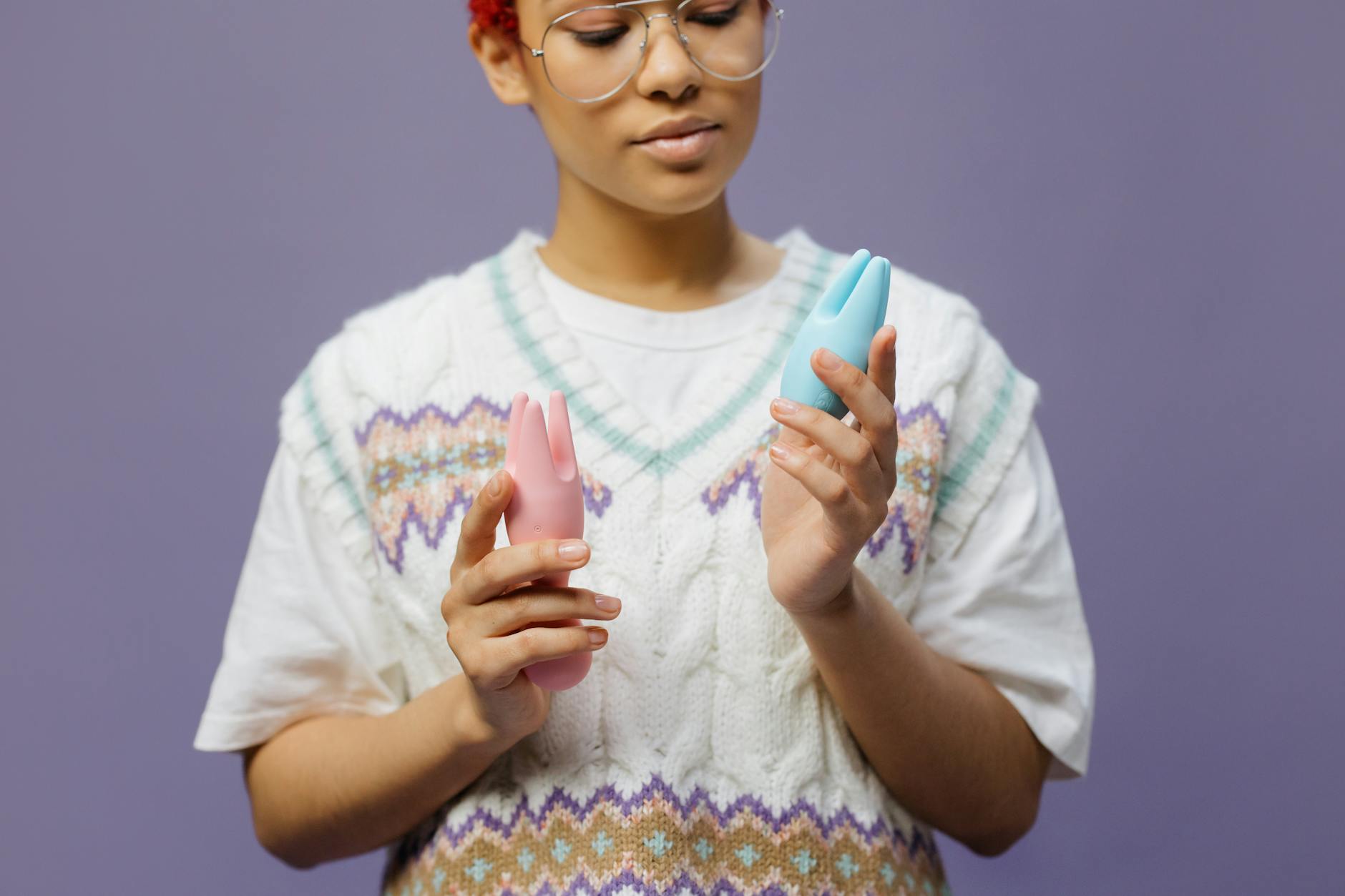
How to Use a Lemon Vibrator for Couples Foreplay and Building Intimacy
Let's be real. The moment you're thinking about introducing a lemon vibrator or any clitoral vibrator into partner play, a whole cascade of worries kicks in. Will they think I'm not satisfied with them? Will it feel clinical? Will the moment get weird? These questions are so common that I'd say I hear them in almost every couples session where vibrators come up.
Here's what I know after years of working with partners: toys don't make intimacy awkward. Silence and avoidance do. A lemon clitoral vibrator is actually one of the easiest entry points into deeper, more collaborative foreplay because it shifts the focus from performance to sensation.
The conversation you need to have first
Don't surprise your partner with a toy during sex. I know that sounds like fun in movies, but in real life, shock doesn't usually lead to arousal. It leads to defensiveness.
Instead, have the conversation when you're not touching. Sitting on the couch, having coffee, getting ready for bed. Neutral territory, neutral arousal level. The opener matters here. Not "I want to try vibrators because you're not enough," but something like: "I've been thinking about ways we could explore more sensation together. I read about lemon vibrators, and I'm curious if you'd want to experiment."
That frame is collaborative. It's not about what's missing. It's about what you want to build together. The difference in how partners respond to those two framings is dramatic.
Why lemon vibrators work so well for couples
Clitoral vibrators like the Lem are intimate in a way that other toys aren't. They're smaller, quieter, and they take the focus off penetration. That matters more than you'd think. A lot of couples find that the pressure to perform penetrative sex actually inhibits pleasure. Lemon sexual toys shift that entirely.
For the penetrating partner, it also removes the pressure to be the sole source of stimulation. That's genuinely freeing. Many people describe it as finally getting to relax and connect without the constant mental load of "Am I doing this right?"
The receiving partner gets the suction and precision stimulation that fingering or intercourse alone often can't provide. And here's the thing nobody talks about: clitoral vibrators make it easier to orgasm during partner contact, which changes the dynamic from "me getting off while they watch" to "us being in this together."
Starting slow. Literally.
When you first introduce a lemon clitoral vibrator into foreplay, don't launch straight into full intensity. Start with the lower settings, even if you've used vibrators solo. Partner presence changes everything neurologically. Some people find that even pattern 2 on a lemon vibrator feels intense when they're already aroused with a partner nearby.
Begin during extended foreplay before any other penetration. You want time to warm up, to get used to the sensation, and to let your nervous system adjust. This isn't the moment for efficiency. Budget 20 to 30 minutes minimum. Real foreplay, not a sprint to the main event.
Let your partner hold the toy. Control matters here. When someone else is directing the sensation, it changes your brain state. You stop strategizing and start receiving. And for the partner holding the toy, there's a very real intimacy in being trusted with that. It's generative.
The rhythm and timing conversation
Before things get intense, agree on signals. Not in a clinical way. Just clarity on what helps and what doesn't. Some questions that are worth asking:
- Do you want constant pressure or pattern variation?
- Should I stay in one spot or explore different areas?
- When do you want me to move faster versus staying steady?
- What's your signal if you need me to pause or adjust?
These don't need to be a formal chat. But they prevent a lot of in-the-moment guessing. The partner holding the lemon sucker gets to feel competent and attentive. The receiving partner doesn't have to manage their partner's anxiety while managing their own sensation. Everyone wins.
Integrating it into intercourse
Some couples use a lemon clitoral vibrator during penetration. Some find that vibration plus fullness is overwhelming in the best way. Others find the angle awkward and prefer to use it before or after.
If you're exploring this, the receiving partner should have their own hand free or the vibrator should be positioned so they can control it. Loss of control during penetration combined with vibration can tip into overstimulation quickly. Keeping agency over the toy keeps pleasure where you want it.
Starting position matters too. Face-to-face or positioned where you can see each other changes the experience. There's a reason that visibility and eye contact deepen intimacy. You're not just feeling sensation. You're witnessing each other's pleasure.
Why lemon adult toys specifically support couples
Design matters. The Lem vibrator is designed for precision without being aggressive. It's also quiet enough that you can actually talk during use without shouting over a buzz. That might sound small, but dirty talk and connection don't happen when you're yelling.
The lemon sucker shape is also intuitive for partner use. Unlike some toys that need specific angles or depth, clitoral vibrators are straightforward. There's less to learn and more room for genuine exploration.
Managing insecurity on both sides
If you're the partner bringing the toy in, your partner might worry they're not enough. Address it directly: "I want this with you, not instead of you. This is about expanding what we do together."
If you're the receiving partner and you're nervous about bringing it up, remember that most partners are relieved when toys are on the table. The pressure to be the only source of all pleasure is exhausting for the person providing sensation too.
Insecurity often lives in silence. Named, it shrinks. I've watched so many couples shift from anxiety to genuine excitement the moment they actually talk about it.
The logistics nobody mentions
Lube. Water-based, always. A lemon clitoral vibrator works best with a light layer. It reduces friction and often makes the sensation feel even better.
Battery management is relevant too. A dead vibrator mid-moment is a mood killer. Check battery level before foreplay starts. Keep the charger accessible but discreet.
Cleanup is easy. But if you're sharing a toy between partners, use a condom over it or wash it between use. Simple hygiene, zero awkwardness if you just plan for it.
What happens after
The moment after orgasm is when a lot of couples default back to separation. Someone's satisfied, so the intimacy ends. Don't let that happen with toy-inclusive foreplay. Stay close. Keep touching. Let the nervous system integration happen. This is where actual bonding occurs, not during orgasm itself.
Talk about what worked. Not in a clinical autopsy way. Just "That was really good" or "I liked when you..." This feedback loop is how couples learn what intensifies connection. It's also unsexy information being communicated in a sexy way, which is the whole point.
Different body types, different approaches
If the receiving partner has a higher or lower clitoris, or if angle makes a difference, the lemon clitoral vibrator's size and design work in multiple positions. Lying back, sitting up, from the side. Flexibility matters because pleasure shouldn't require gymnastics.
Some people find that the suction sensation of certain vibrators doesn't work with their anatomy. That's not a failure. It just means the lemon vibrator might not be your tool, and that's completely fine. The point is exploration, not forced compatibility.
Building a sustainable rhythm
This isn't about doing it every single time you have sex. Some couples integrate toys occasionally. Others make it a regular part of their repertoire. Neither is more correct. What matters is that it's something you chose together, revisited together, and can adjust together if preferences change.
As you use a lemon sexual toy more, you'll learn what you both like. That knowledge deepens confidence. And confidence is what actually builds sustained intimacy.
FAQ: Couples and Lemon Vibrators
Can using a vibrator make it harder to orgasm with my partner alone?
Not inherently. The research on this is mixed, and mostly it depends on your psychology. Some people find that once they know what orgasm with vibration feels like, intercourse alone feels less satisfying temporarily. That's not about the toy damaging anything. It's about your brain recalibrating to a new sensation. Usually that settles down within a few weeks if you alternate. The key is not replacing all partner contact with toy use. Balance matters.
My partner suggested using a vibrator and I feel like they're saying something's wrong with me.
That's worth a direct conversation. The suggestion might be about expanding pleasure, not about disappointment. But feelings are feelings, and if you feel rejected, that's real and needs addressing. Try something like: "When you mentioned vibrators, I felt like maybe you weren't satisfied. Can we talk about what you were actually thinking?" You might find out they've been waiting for you to be open to it, or that they saw it as a fun experiment, not a critique.
Is there a "right" way to introduce a lemon vibrator in a couple's context?
Yes and no. The core is communication, consent, and shared enthusiasm. The specifics are totally individual. Some couples need the conversation weeks in advance. Others can be spontaneous. Some need to research together. Others prefer for one person to pick something. The method matters way less than the openness.
What if my partner is uncomfortable with the idea of a clitoral vibrator?
Uncomfort usually comes from one of three places: worry that they'll be replaced, shame about sexuality, or genuine mechanical preference. Each needs a different approach. For the first, time and reassurance help. For the second, you might explore that shame together with someone trained in it (a therapist). For the third, you just move on and find what works. Pushing doesn't build intimacy.
Can a lemon clitoral vibrator actually improve our sex life?
It can shift things, yes. But the vibrator isn't what improves intimacy. The willingness to explore together, to communicate, to prioritize each other's pleasure without defensiveness. Those are what improve sex. The toy is just a tool that makes some of that easier. The real work is relational.
Should we use a vibrator every time we have sex?
Absolutely not. Variety is neurologically important. Some sessions focused on vibration. Some on other forms of touch. Some on penetration alone. Some on extended foreplay without any toys. Your nervous system stays engaged when there's variation. It also keeps the toy from becoming a crutch, which helps with solo sensitivity.
Integrating a lemon vibrator into couples' foreplay isn't about fixing something broken. It's about two people deciding to expand the palette of sensation they share. That mindset shift alone changes everything.