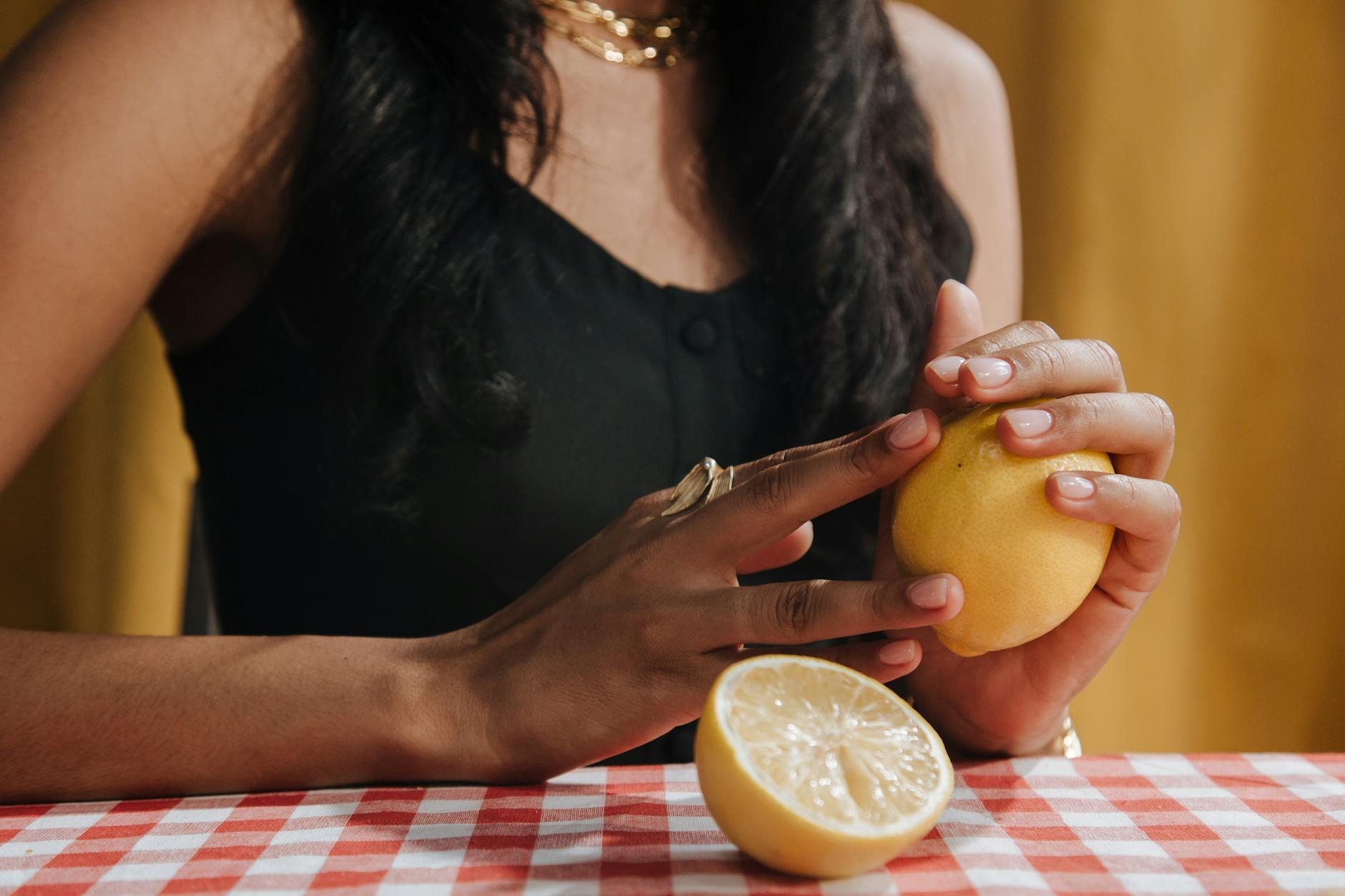
Let's be real: your body after kids is not the body you had before. And I don't just mean the visible stuff. I mean the nervous system, the pelvic floor, the way sensation travels, how long arousal takes to build, what feels good now versus what felt good two years ago.
Most people expect pleasure to return to "normal" once they're cleared for sex again. That's the mistake. Pleasure doesn't return. It shifts. And once you accept that, you can actually start rebuilding something that might feel even better than before.
Here's what actually happens postpartum, and how to use a lemon vibrator when your body is still figuring out how to feel pleasure again.
What pregnancy and birth do to sensation
Pregnancy and birth change pelvic floor function. Even if you had a vaginal delivery with minimal tearing, or a cesarean section, the pelvic floor spent nine months under increased pressure and hormonal changes. After birth, it needs time to reorganize.
Your nervous system also needs recalibration. Breastfeeding, if you're doing it, changes how you experience touch on your chest and elsewhere. The constant low-level activation of your parasympathetic nervous system from caregiving can make it harder to shift into the arousal mode that activates your sympathetic nervous system.
Tissue thickness often changes too, especially if you're breastfeeding. Prolactin suppresses estrogen, which can thin the vaginal tissue and reduce natural lubrication. This isn't permanent, and it's not a sign something's wrong. It's a sign your body needs different support.
Here's what doesn't change: your capacity for pleasure, your nerve endings, your ability to orgasm. The hardware is still there. The settings just need adjusting.
Why postpartum arousal feels so foreign
There are five reasons postpartum desire and sensation feel different, and only one of them is hormonal.
The hormonal piece. Estrogen, progesterone, and testosterone have shifted. If you're breastfeeding, prolactin is high. This combination naturally dampens libido. This usually improves once hormones rebalance, but it takes time. For some people, it takes 12-18 months.
Touch depletion. You've been touched constantly. Your toddler needs you. Your newborn needs you. Your partner wants you. By the time you're alone, you're touched out. The idea of more touch, even pleasure-focused touch, can feel depleting rather than exciting.
Cognitive load. You're running logistics, schedules, worry. Your brain isn't free to drift into arousal. Arousal requires mental space. Postpartum brain rarely has it.
Identity shift. You're mom now, or you're more of a mom than before. That identity can feel protective in a way that makes sexual identity harder to access. Some people need to consciously separate the two.
Pelvic floor tension. Guarding is real. After birth trauma, after perineal tears, after months of pressure, the pelvic floor sometimes stays in protective clench mode. A clenched pelvic floor makes arousal harder and orgasm less accessible.
All of this is normal. None of it means something is broken.
Starting slow with sensation: the solo foundation
Honestly though, the best place to rebuild postpartum pleasure is alone. Not because partnered pleasure isn't worthwhile. Because you need to remember what your body feels like without the pressure of someone else's expectations.
Start here: solo time. No phone, no rush. Fifteen minutes when nobody needs anything.
Begin with breathing. Your pelvic floor is probably holding tension. Breathe into it. In for four, hold for four, out for six. The long exhale signals safety to your nervous system. Do this for two minutes before anything else happens.
Next: touch without vibration. Hands on your inner thighs, your breasts, your abdomen. Just feel. Notice what feels warm, what feels numb, what surprises you. This is data collection, not arousal building. Some areas will feel more sensitive than you remember. Some will feel muted. That's information.
Only then: introduce the vibrator. And here's the thing about a lemon vibrator in postpartum bodies. The air-suction technology doesn't require the same direct pressure that other vibrators do. Your tissues are likely still tender. Suction feels different. It's broader, less immediately intense, and often more pleasurable when your body is still reorganizing.
Start on the lowest setting. The lowest. Your nervous system will tell you if it needs more. Listen to it.
Rebuilding with your partner: the conversation first
If you're trying to rebuild partnered pleasure, here's what almost always goes wrong: the partner assumes the disappearance of desire is about them. It isn't. Your body changed. Your brain is elsewhere. Your nervous system is on high alert for a baby's cry at 3 a.m.
Talk about this before you try to be sexual together. Say it out loud. "I'm not less attracted to you. My body is different. My nervous system is different. Arousal takes longer now. I might need different touch. I need you to know this isn't about you."
Then, invite them into the discovery. You using a lemon vibrator doesn't exclude them. It invites them to witness you finding pleasure again. Some partners feel relieved by this. They were worried about doing it wrong. Now they can just be present while you explore.
Set a boundary about frequency. Postpartum pressure to perform sexually is real and counterproductive. Once a week, maybe twice if you want it. No obligation to finish what you start. No obligation to have an orgasm. Permission to stop if it doesn't feel good.
The physical setup that actually helps
Four things make postpartum pleasure easier.
Lube. Always. Water-based, every time. Your tissue is thinner right now. Friction matters more. Lubrication reduces it.
Time to warm up. Budget twenty minutes before any direct genital touch. Your nervous system needs to downshift from fight-or-flight. This isn't wasted time. This is essential time.
A clitoral vibrator, not penetration. Here's where a lemon vibrator shines postpartum. Your pelvic floor is still healing. Your vaginal tissue is still reorganizing. Clitoral stimulation bypasses a lot of that. Orgasm through clitoral pleasure often feels more accessible than penetrative pleasure right now.
Permission to stop. Pain means stop. Numbness means maybe stop. Boredom means stop. Postpartum pleasure isn't a performance. It's a reconnection. If it's not happening, that's data. Not failure.
When to reach out for help
If pain persists beyond what you'd expect from birth trauma, see your pelvic floor physical therapist. This isn't optional. Chronic postpartum pain is real, and it's treatable.
If desire hasn't shifted at all after six months past hormonal rebalancing, a conversation with your partner about what's happening emotionally might be more useful than another vibrator. Sometimes postpartum pleasure stays suppressed because reconnecting feels unsafe, or because resentment is running underneath.
If you're having intrusive thoughts during sex, or if touch triggers anxiety, talk to a therapist who works with postpartum mental health. This is common after birth trauma, and it's also treatable.
The real postpartum shift
Here's what I've seen happen in my practice over and over. Postpartum bodies eventually reconnect with pleasure. But it's rarely identical to pre-kid pleasure. It's often deeper, more intentional, less automatic. People know themselves better. They know what they actually want versus what they think they should want.
Use the lemon vibrator. Use it alone first. Use it as a way to listen to your body, not perform for anyone. Your pleasure matters. Your sensation matters. And your postpartum body, different as it is, still has everything it needs to feel good.
People also ask
How long after birth can I use a clitoral vibrator?
Wait until you're cleared for sex, usually four to six weeks after vaginal delivery or six to eight weeks after cesarean. Then start with the solo practice I mentioned. Don't rush into vibrator use. The pelvic floor heals gradually. A clitoral vibrator like a lemon sucker can be gentler on sensitive tissue than other options, but start on the lowest setting and listen to your body.
Will using a lemon vibrator affect my pelvic floor recovery?
No, not when you use it correctly. External clitoral stimulation doesn't stress the pelvic floor the way penetration sometimes does. If anything, learning to achieve orgasm through clitoral pleasure can reduce pressure to engage in penetration before you're ready. That actually supports recovery.
Can I use a lemon vibrator while breastfeeding?
Yes. Breastfeeding doesn't contraindicate pleasure. What it does do is lower estrogen, which can make tissue more sensitive or dry. Use more lube. Start slower. Your body is managing a lot. Be gentle with it.
How do I talk to my partner about wanting to use a clitoral vibrator postpartum?
Try something like this: "My body is still recovering. I want to explore pleasure in ways that feel safe for me right now. A vibrator helps with that. I'm not asking you to leave. I'm inviting you to be present while I figure out what feels good." Most partners feel relieved. They were worried about doing it wrong.
What if I still have no desire after a year?
Talk to someone. This could be postpartum depression or anxiety hiding under low desire. It could be resentment toward your partner. It could be identity confusion. It's rarely just biology at this point. A therapist who understands postpartum mental health can help.
Is it normal for postpartum orgasms to feel different?
Completely. Orgasms can feel smaller, bigger, in different places, harder to reach. Your pelvic floor configuration changed. Your nerve pathways are reorganizing. Your brain is different. Give it time. Most people report that sensation stabilizes around nine to twelve months postpartum.
Moving forward
Your postpartum body isn't a return to your pre-kid body. It's a different version. And different isn't worse. It's just different. A lemon vibrator can be a tool for getting curious about that difference, not trying to erase it. Use it gently. Use it alone first. Let yourself be surprised by what feels good now.
If you're navigating this transition and want to talk through what's happening in your relationship or your body, we're here. Reach out at /contact.