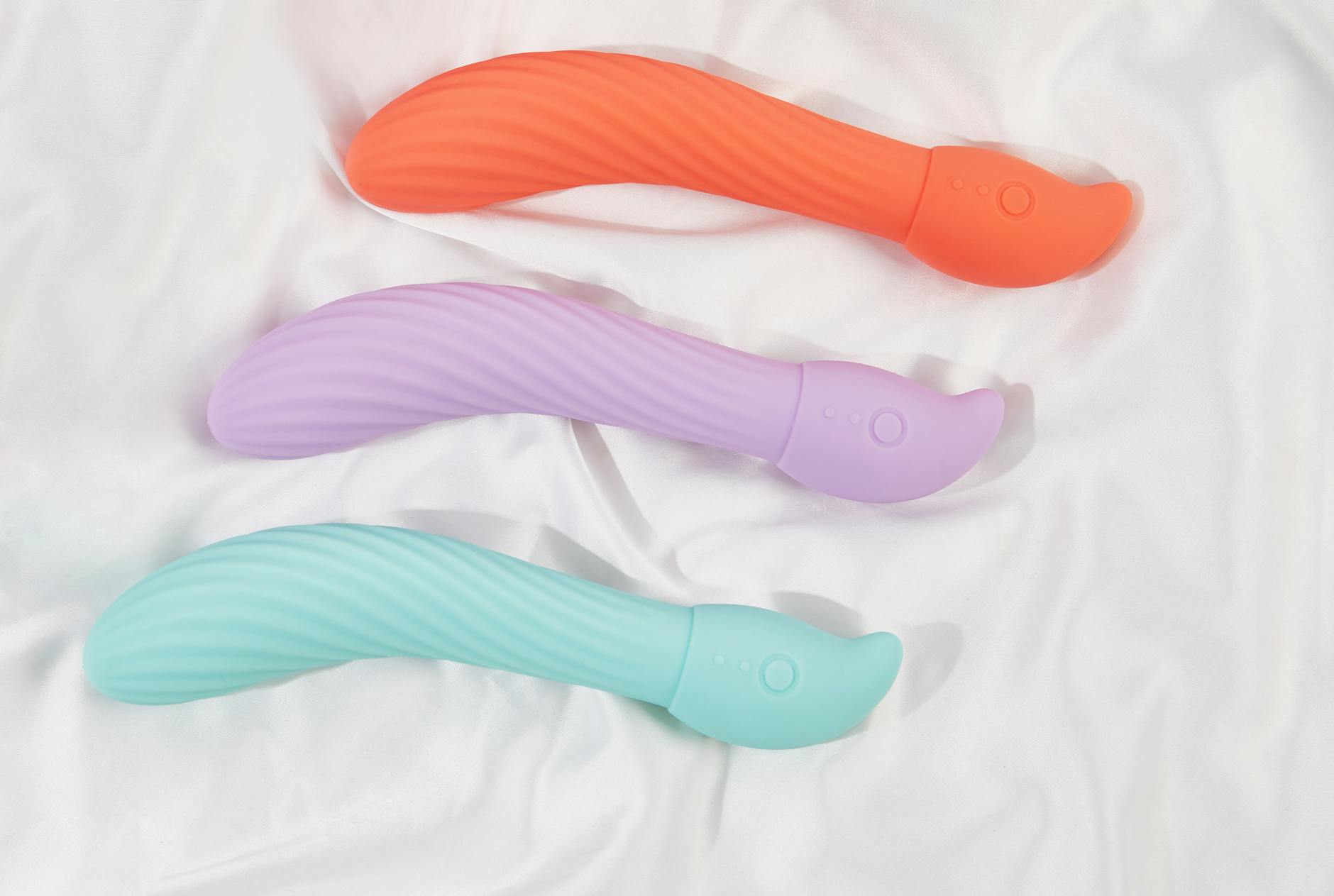
The question everyone's afraid to ask out loud
Let's be real. Menopause changes your body. Your vulva tissue gets thinner. Your natural lubrication drops. And somewhere between noticing that and considering whether to use a lemon vibrator again, you might be wondering: will this hurt?
The answer is almost always no. But "almost" matters, and so does the context.
What actually happens to your tissue after menopause
Estrogen doesn't just affect your mood or your skin texture. It keeps vaginal and vulvar tissue thick, elastic, and well-supplied with blood flow. When menopause flips that switch, tissue becomes thinner and more fragile. This is called atrophy, and it's incredibly common.
But here's the part they don't explain clearly: thinner tissue is not broken tissue. It's not wounded. It just has less cushioning and responds faster to stimulation.
Think of it like the difference between a thick cotton towel and a silk handkerchief. Both are functional. One gives you more room before you hit the bone underneath. The other doesn't require as much pressure to create sensation.
Why intensity feels different, not painful
Most people post-menopause who use clitoral vibrators notice that the same intensity level they used before feels different. It might feel sharper. More direct. Less muffled by tissue.
That's not pain. That's just signal clarity.
Pain, actual pain, is typically sharp, burning, or sustained discomfort that persists after you stop. A lemon vibrator hitting thinner tissue might feel intense or even surprising, but it shouldn't feel like you're being torn or damaged.
If it does, stop. That's the signal.
How to test your own sensitivity threshold
You need to find your personal sweet spot, and the only way to do that is to start low and pay attention.
Here's the protocol: begin at the lowest setting. If you're using a Hello Nancy lemon vibrator, that's usually pattern 1 or 2. Spend 2-3 minutes there. Notice what you feel. Is it pleasant? Meh? Too much?
Then move to the next level up. Again, 2-3 minutes of attention. Your threshold might be pattern 3. It might be pattern 5. There is no "right" number.
The critical part: don't jump straight to the intensity you used to use. Your nervous system needs to recalibrate with the new tissue reality. Jumping the queue is how surprises happen.
Lubrication changes everything
This is the part that actually matters more than tissue thickness.
Natural lubrication drops during menopause. And when you're using any clitoral vibrator, even the gentlest lemon sucker design, the absence of lube fundamentally changes the sensation and the friction load on your tissue.
Water-based lube is your friend. Use it generously. It sounds obvious, but most people skip this step because they remember being able to go dry before, or they think lube means something's wrong.
Neither is true. Lube is a tool, not a admission of failure. A good water-based lubricant actually makes lower intensities feel better because it distributes the stimulation more evenly. You can use less pressure and feel more.
This is especially true for air-suction vibrators like lemon vibrators, which work via gentle suction rather than vibration alone. The suction creates a seal, and that seal works best with a small amount of lube. Not drowning, just enough.
The types of sensation that mean slow down
Listen to these signals:
Sharp stinging. If the sensation is like a quick needle poke, that's your tissue saying "too fast, too direct." Dial down the intensity or add more lube. Sometimes both.
Pulling sensation. If it feels like something is tugging at your skin, you probably need lube. The vibrator is pulling at dry tissue. Water-based lube will usually fix this in seconds.
Buzzing that travels weirdly. If the vibration seems to be hitting a nerve in an uncomfortable way, or radiating into areas where you don't want sensation, that's a clue to change position or lower the intensity.
Sustained ache after stopping. If you feel sore for hours after using a vibrator, you went too hard or too long. Respect that signal. Shorter sessions at lower intensity will actually give you better orgasms anyway.
The sensations that mean you're in the sweet spot
Here's what good feels like:
Warmth and building pressure. Increasing pleasure over the first few minutes. The ability to control your approach to orgasm. The sense that you could stop anytime without discomfort. Orgasm that feels satisfying, not like relief from tension.
If you're feeling those things, your intensity is right for you right now.
The speed advantage of lemon vibrators after menopause
Here's why clitoral vibrators like the lemon design are particularly smart for post-menopausal bodies: they use suction and pulsing patterns instead of raw vibration intensity.
This matters because suction disperses pressure across a broader area. Instead of concentrating force on one spot of thin tissue, it distributes it. You get intense sensation without the fine-point pressure that can feel sharp on atrophied tissue.
The lemon vibrator also gives you granular control. You're not choosing between "on" and "off." You have 5 or 6 intensity levels and often multiple patterns. That means you can find your exact sweet spot without guessing.
Many people discover that they actually prefer lower intensities after menopause because the sensation is cleaner. You're not fighting through thick tissue to feel anything. You feel everything, immediately, at lower power. Some of my clients report deeper, more satisfying orgasms at intensity level 2 than they ever had at level 5 before.
When to talk to a doctor instead
There's a difference between intensity that feels strong and pain that signals a problem.
Genitourinary syndrome of menopause, or GSM, is a real condition where tissue becomes so thin and fragile that penetration or even direct stimulation causes actual pain. This is different from "oh that's intense." This is burning, tearing sensation, or pain that lasts.
If you're experiencing that, a pelvic health specialist or menopause-informed gynecologist can prescribe localized estrogen cream that rebuilds tissue over 6-12 weeks. You don't have to white-knuckle through this.
Also worth mentioning: if you were never able to use vibrators comfortably and assumed menopause made it worse, get checked anyway. Sometimes what we think is menopause-related sensitivity is actually pelvic floor tension or nerve irritation that a physical therapist can help with.
The timing question: when in your cycle does it matter
Here's something most guides skip: if you're not fully post-menopausal yet, hormonal fluctuations still change how you feel.
Many people in perimenopause notice that some weeks they're sensitive and some weeks they're not. That's not you being broken or inconsistent. That's your remaining hormones creating temporary swings.
If you notice a pattern, keep a simple note: which intensity level felt good this week? That data helps you avoid the trap of thinking you're "doing it wrong" when really your hormones are just varying.
Once you're fully post-menopausal (one year without a period), things usually stabilize. Your sensitivity threshold becomes more consistent.
Practice beats perfect
The most important thing I tell people is this: your post-menopausal body is not a worse version of your younger body. It's a different version, and different means you get to relearn your own pleasure.
That relearning is actually an opportunity. Most people rush through it or get discouraged. The people who slow down and pay attention often discover that they have more nuanced, deeper pleasure available than they've ever experienced.
Start low. Use lube. Notice what feels good. Adjust. That's not complicated. It's just deliberate.
Your sensitivity matters. Your pleasure matters. And that lemon vibrator isn't going anywhere while you figure out exactly how to make it work for you.
People also ask
Can menopause make clitoral vibrators painful?
Not inherently, no. Menopause changes tissue thickness and lubrication, but it doesn't create nerve damage or pain pathways. What changes is how directly you feel stimulation. Most people find this manageable with lower starting intensities and lube. Actual pain (burning, tearing, persistent ache) is usually a sign of GSM or pelvic floor tension, both treatable by a specialist.
Why do lemon vibrators feel sharper after menopause?
Lemon vibrators and similar clitoral devices work through suction and pulsing, which creates focused stimulation. After menopause, thinner tissue means less cushioning between the vibrator and the nerve endings underneath. The sensation reaches your nerves faster and more directly. This isn't bad, it's just clearer. Starting at a lower intensity and building up helps your nervous system recalibrate.
How much lube should I use with a lemon vibrator after menopause?
About a nickel to dime-sized amount on the silicone tip is a good starting point. You're not looking to drown it, just to create a smoother interface between the vibrator and your tissue. If you're noticing stinging or pulling sensations, more lube is almost always the first solution before assuming you need lower intensity.
Is it normal for orgasms to feel different after menopause?
Completely normal. Your pelvic floor has less estrogen support, so contractions might feel different. Some people find them shallower, others more focused. Many people report that orgasms become more satisfying after menopause because there's less hormone noise and more mental clarity. Give yourself permission to notice what's different and call it evolution, not loss.
Can I still use the same intensity settings I used before menopause?
You might be able to, but there's no reason to start there. Think of it like adjusting a camera: menopause changed your lens. You're not aiming for the same settings. You're aiming for the same outcome. That might mean lower intensity, or it might mean different patterns entirely. Test low first. You can always go up.
Should I be worried if intensity feels uncomfortable at first?
No. It's worth checking in with your body and adjusting, but discomfort usually resolves with lube and lower intensity. Pain that persists or feels sharp and tearing is worth mentioning to a doctor. But the sensation of "oh that's more intense than I expected" is just information. Use it to dial things in.
The bottom line
Menopause changes your body, but it doesn't revoke your right to pleasure or your ability to feel good. Your tissue is different. Your nervous system is still intact. A lemon vibrator or any clitoral vibrator works just as well after menopause as before. It just requires a slightly different approach: start low, use lube, pay attention to what your body tells you, and trust that the sweet spot is out there waiting.
If you're navigating pleasure and intimacy through this transition and want to talk through what's working and what isn't, I'm here. You can reach out anytime at /contact.